
Story 13: Weekends in Another Time
From Elmhurst to Sibley, and Back
By Kathleen Hawkinson
This story is a “place” story about two contrasting places, one in the suburbs and one in a rural county. Submit your story at StarHitchers.com.
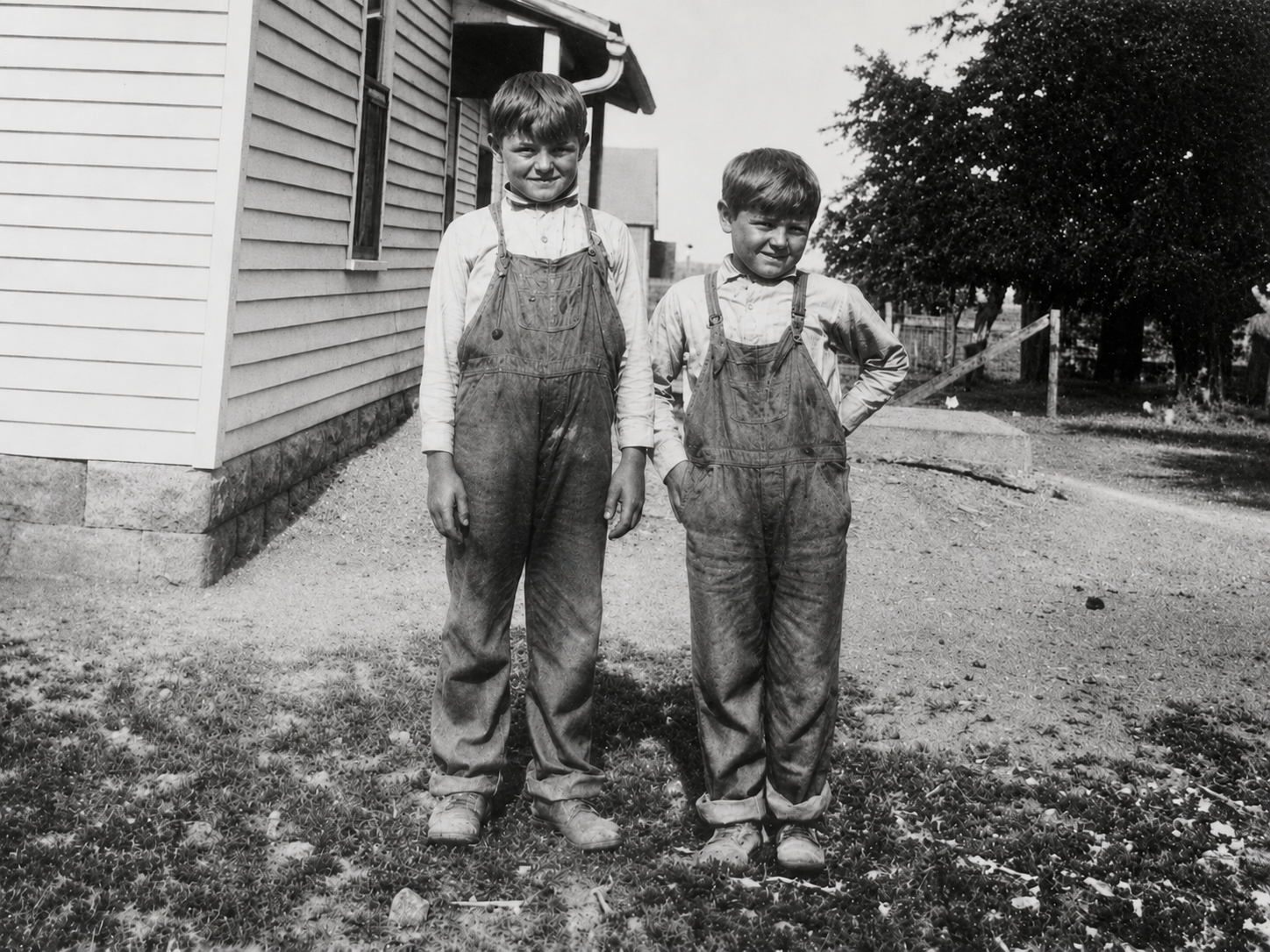
Harry (left) and Bob Skinner, brothers and friends, on the farm near Sibley, Illinois, 1920s.
The Story
On Friday after school, we drove ninety miles from suburban Elmhurst to two tiny towns in Livingston County. It wasn't simply a trip south. We were traveling backward in time.
I was a suburban girl growing up. We lived in Elmhurst, just beyond O’Hare Airport, in a neighborhood of returning World War II vets and their families.
My mother’s family was close by. Grandpa Alford was a medical doctor in Crystal Lake, a gentle man with a scientific turn of mind. He made house calls and delivered generations of babies.
Grandma Rilla Alford was a thoroughly modern Milly; she kept a meticulous home with contemporary furnishings. Grandma was artistic and poetic. She made us “Walter Winchell” egg sandwiches late at night when she and Grandpa came home from a party. Grandma introduced us to society.
On many weekends, my family left the suburbs, venturing south on Route 66 to two little towns in Livingston County—Sibley and Strawn. This is where my dad grew up.
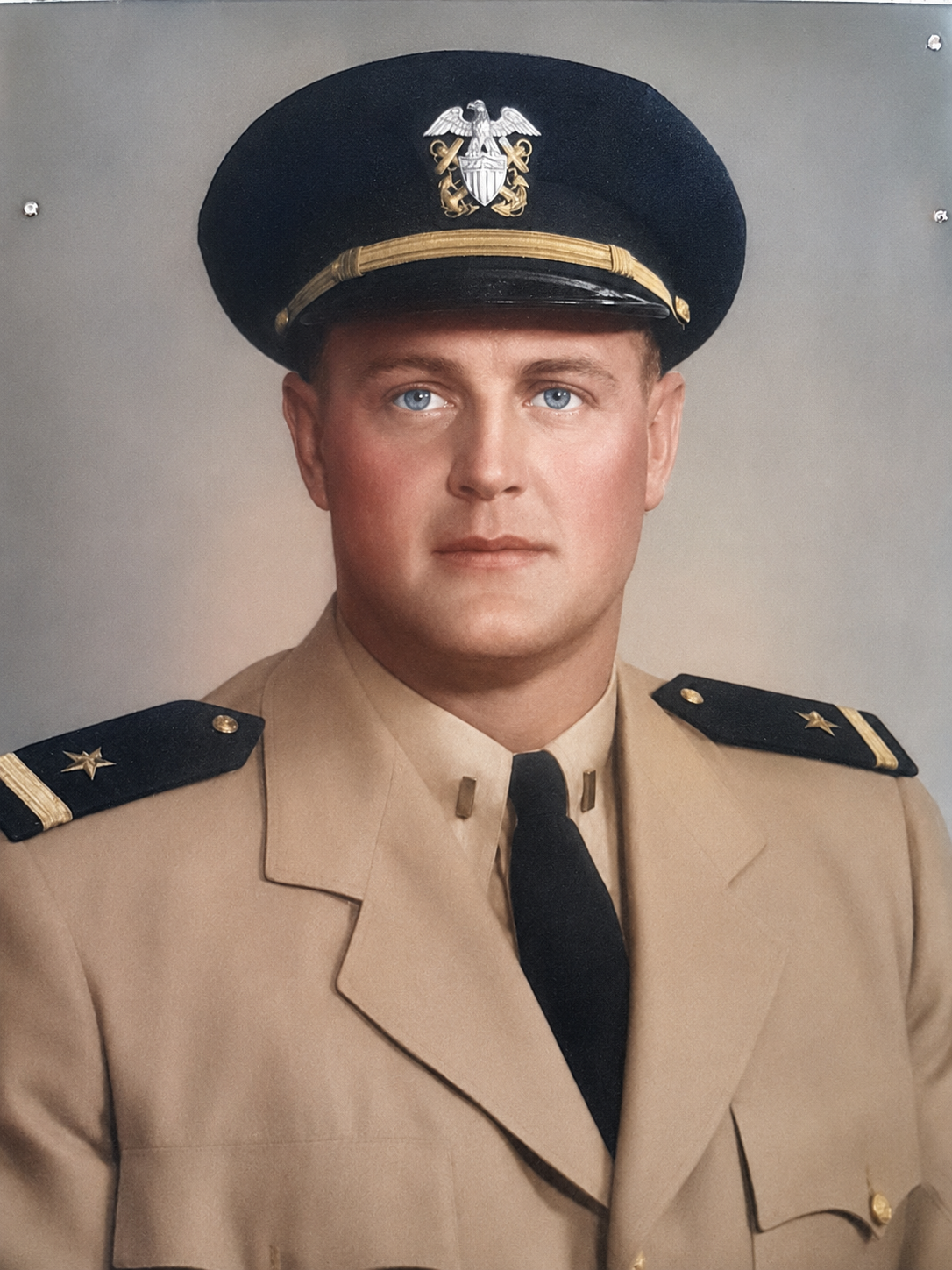
My dad, Bob Skinner, one of the veterans who started a family in Elmhurst, the Chicago suburb.
Dad’s Family
Dad’s family were farmers, trappers, and hunters. They were physically big with personalities that filled the room.
Dad's family filled Livingston County. We stayed with Uncle Harry and Aunt Ernie in Sibley. Grandpa and Grandma Skinner lived a few miles away in Strawn, and Dad's brothers and sisters were never far away.
Of Dad’s five siblings, Harry was closest to him in age. They looked alike and were inseparable as children. We stayed in Harry’s house in Sibley.
Friday and Saturday night I’d sleep in the middle between cousins Vic and Kay in a double bed, listening to the country sounds of crickets, cicadas, and mourning doves. These were sounds I never heard over the traffic, trains, and airplanes at our home near O’Hare Airport.
I loved staying the weekend with my Uncle Harry, Aunt Ernie, and my five cousins—Ron, Kay, Vicky, Gary, and Mark. I had such a crush on Gary. I thought he looked just like Elvis Presley.
Aunt Ernie would send us up town to the little general store for Chef Boyardee pizza mix. There were no pizza places in Sibley. We would help her make it and then have her yummy banana cake for dessert.
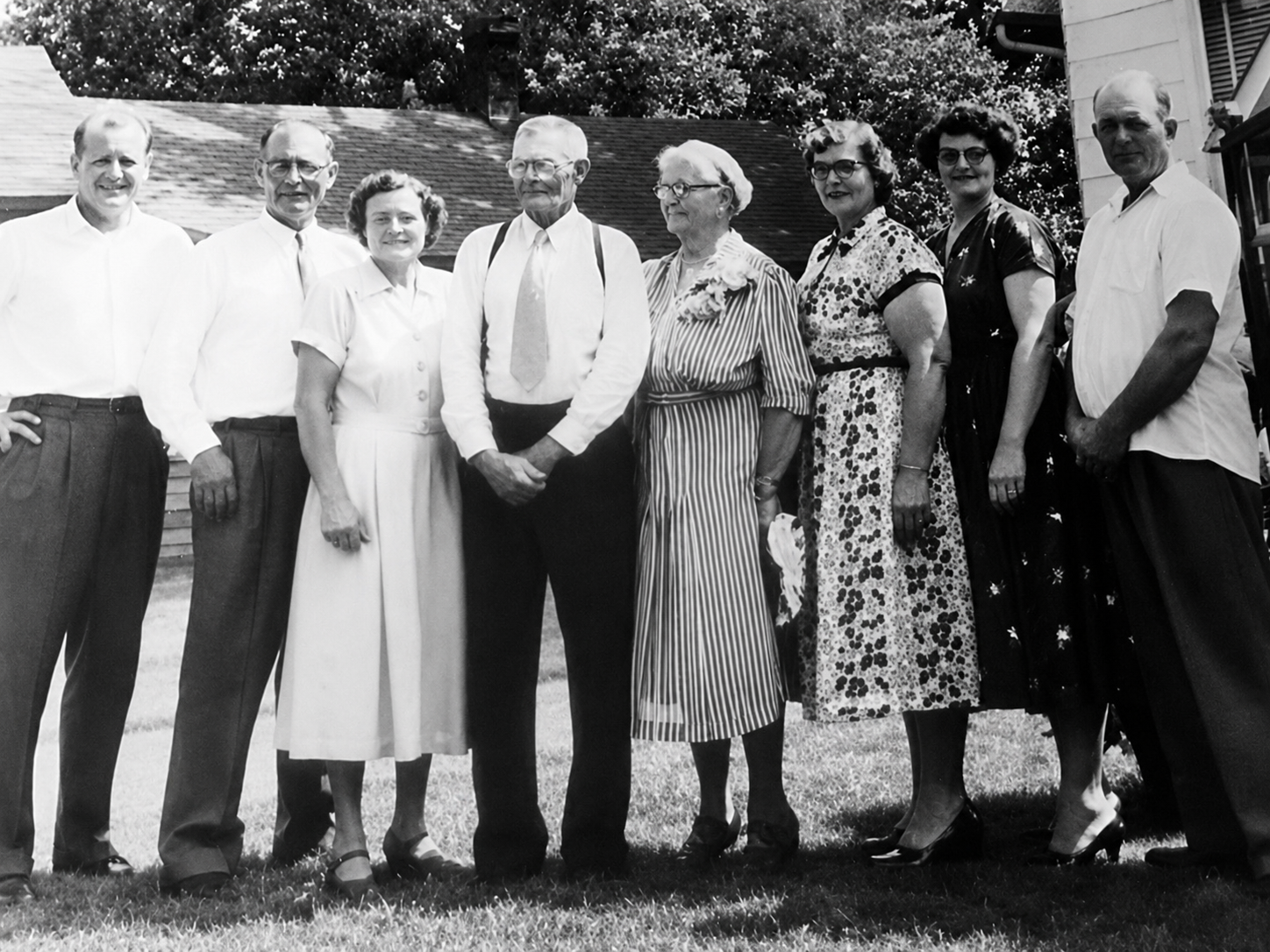
The Skinner family: Bob, Dale (Budge), Merle, Grandpa Robert, Grandma Emma, Luella, Eileen, Harry
Hunters and Shooters
Harry and Dad loved to shoot and hunt. They could shoot a hundred clay pigeons and never miss at trap shoots. I loved the special metal belt buckles awarded to the best trap shooters.
On Saturdays my dad, Uncle Harry, Grandpa Skinner, and Uncle Dale, who we called Budge, would go hunting sometimes for pheasants.
I remember one trip “down home” during pheasant season. We piled in the car, windows all open, no air conditioning, plenty of beer, cigarettes, and a loaded shotgun.
Driving down Route 66 one time, my Dad suddenly shouted to Mom, “Lou, take the wheel,” and he shot at a pheasant out of the window. I don’t know if he hit it or not because we didn’t stop. But I sure remember the sound.
Once my dad and Harry took Gary and me hunting. I was eager to go, but I could tell my mom was furious in her soft-spoken way. Her eyes flashed when Dad told her he was taking us.
We were the dogs. Dad and Harry sent us down the corn rows to flush out the pheasants. I only went as the dog once, not my favorite family role.
Weekends
Friday night was movie night in the town’s small park. We took blankets and bought blue popcorn. It was so much fun to visit with everyone and share a movie together.
I remember seeing Jimmy Stewart in “Harvey the Invisible Rabbit.” Dad and Harry would walk over and have a cold beer at the Star Café. They left the oldest cousins in charge of the little ones. We would walk the four blocks home together.
Sunday before going home we would head over to Grandpa and Grandma Skinners in Strawn for Sunday dinner.
For a child from the city, the Skinner home was like going back in history. They had a parlor with dark purple, velvet horse-hair furniture. They proudly displayed large, oval, beveled-glass baby pictures of their six children: Merle, Dale, Luella, Harry, Eileen, and Robert, Jr. (my dad). Most family activities were in the large dining room where we gathered around the table and played games.
Grandma’s Sunday dinner was always the same: fried chicken, mashed potatoes, white gravy, and corn.
The aunts and uncles had purchased a new electric range for grandma. I never saw her use it. Our Sunday dinner was cooked on the old, black, cast-iron cook stove. Grandma used corn cobs for fuel and fried the chicken in an iron skillet. It was the best Sunday dinner ever. The chicken was so crunchy and the gravy had great cracklings. After dinner we would sometimes pick berries, sweet cherries, or tomatoes to take home.
The Basement
I always asked Grandpa Skinner if I could see the basement. He kept his traps and animal skins there. For me, this was a creepy, scary place. But I was very curious about it and couldn’t resist seeing it.
Grandpa would show me the traps he used to catch squirrels, muskrats, and minks for their hides. His basement was a little frightening, but I had to see it. I had to go there with Grandpa.
Grandpa was quiet and rarely said much to me. Part of the mystery of the basement was the mystery of Grandpa himself. Grandpa was a dark-complected, wiry man, unlike most of the rest of the family. His mother was a part-Indian woman from Michigan.
In the basement with Grandpa, I felt like I had traveled again back in time. This was a journey even greater than from Elmhurst to Strawn. In a way, I was touching Grandpa’s past and the mysteries it held.
Back to the Suburbs
On Sunday afternoon, I started to realize it was about time to go home. That was when I thought to myself how different this world where my dad grew up was from my home in the suburbs.
Both were places I loved. In both places were wonderful grandparents. But the places were very different. As much as Grandma Rilla looked toward tomorrow, Grandma Emma treasured yesterday.
I was happy in both places, with both sets of grandparents. The transition from one world to the other, however, produced some anxiety. I know now that I became a little hyper in these moments.
Dad knew what was going on with me at these times. He said nothing about it but knew just how to calm me and prepare me for the trip to my other world.
Looking back, I think Dad understood that every weekend I became two different little girls. One belonged to Elmhurst. The other belonged to Sibley and Strawn. Before we headed north, he always took time to let me play on the school fire escape. I shimmied up the silvery tube and then slid back down. Somehow, by the time we climbed back into the car, I was ready to return to my other life.
Threads to Follow
1. Did you grow up between two different worlds? How did those places shape who you became?
2. Which relatives opened a window into a way of life that was different from your own? What did you learn from them?
3. What family traditions revolved around weekends? Which ones have disappeared, and which continue today?
4. Did your parents understand you in ways you didn't recognize until you were older? What small act of theirs now carries new meaning?
5. What place from your childhood still feels like "home," even if you no longer live there?
6. If you were writing your own Star Hitchers story, what family journey—or recurring trip—would you tell?
Author
Name: Kathleen Hawkinson
Place of Residence: Springfield, Sangamon, Illinois
Primary Sources: Memories, interviews with family members, internet search
Subject
Place reported: Elmhurst, Sibley, and Strawn, Illinois
Timespan: 1920-1965
Most descriptive characteristics: Neighborly, Contrasting