
Story 19: The People Behind the Name
The Wyandot story in two American counties
By Sam Redding
This Star Hitcher story is about two counties named after the Wyandot people and the people themselves. Submit your story at StarHitchers.com.
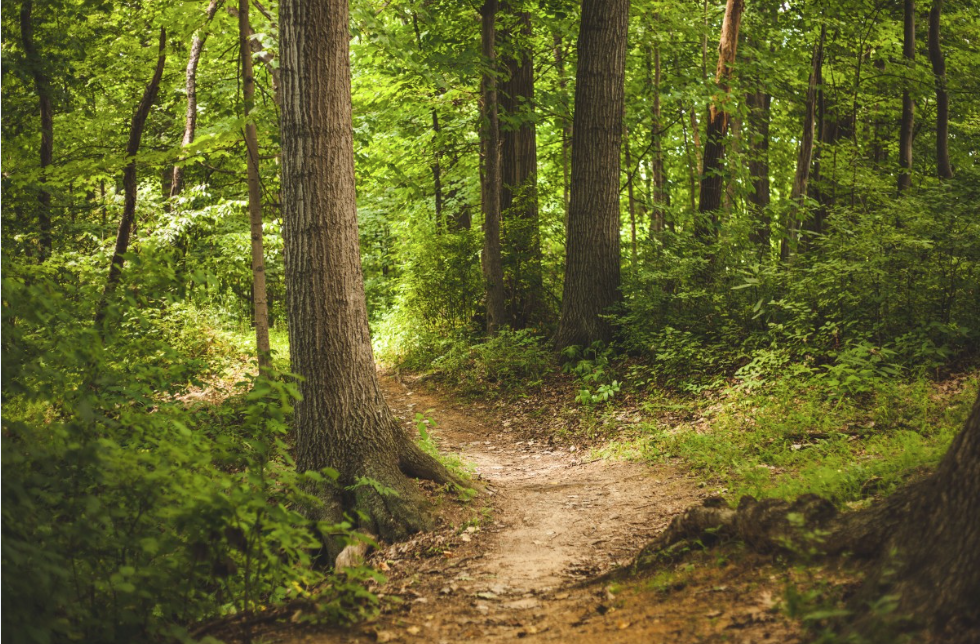
Their journey west was arduous. They traveled by wagon and steamboat to the area where the Missouri and Kansas rivers meet.
The Story
For most of my life, I have known the name of the county where I was born without knowing much about the place itself.
On forms asking for my county of birth, I have always written Wyandotte. It was simply a fact about me, like my date of birth.
But I lived there only eighteen months.
I was born at Bethany Methodist Hospital in Kansas City, Kansas. We lived in my grandmother’s tiny house, perched on a city hillside in the crook of the Missouri River—Grandma, Mom, my dad (home from World War II), an uncle home from the war, two aunts, and a fox terrier named Sissy.
The house is gone now. Today, the place is a vacant lot.
For most of my life, that was all I knew about Wyandotte County, just enough to answer the question about my place of birth.
I was always curious about the name—Wyandotte. Recently, I decided to look into it.
My search led me to another county, this one in Ohio, and eventually to a people whose history stretches across much of the early history of the United States.
The two counties spell the name differently—Wyandot County, Ohio, and Wyandotte County, Kansas—but both took their names from the Wyandot people.
Their story is one of movement, adaptation, loss, and renewal.
The Wyandot in Ohio
The Wyandot, also known as the Wendat, were a Native people associated with the Huron in colonial Canada. During the seventeenth century, warfare with the Iroquois Confederacy forced these people westward. They settled near Detroit in 1701 and took the name Wyandot.
Over the next half-century, the tribe migrated into what is now northwestern Ohio.
Upper Sandusky became an important center of Wyandot life.
After the American Revolution, the Wyandot and other Native nations resisted the growing pressure of American settlement into the Northwest Territory. In 1783, representatives of several tribes met at Upper Sandusky to form a confederation to resist further encroachment.
The struggle continued for years. In 1794, a confederacy of northwestern tribes was finally defeated by the American army under General Anthony Wayne at the Battle of Fallen Timbers.
The United States continued to push westward. Pressure by settlers grew for the vast and fertile lands beyond the Ohio River. The Treaty of Paris in 1783 ended the Revolutionary War and transferred Britain’s claims to lands east of the Mississippi to the United States.
The Northwest Ordinance of 1787 established a system for organizing the vast territory north and west of the Ohio River. The ordinance barred slavery from the region, encouraged education, organized the sale of government land, and established a process for dividing the region into territories and moving them toward statehood.
Ohio was the first state carved from the Northwest Territory, gaining statehood in 1803. Settlement accelerated.
In 1817, the Treaty of Fort Meigs established a twelve-mile-square reservation for the Wyandot at Upper Sandusky, along with other lands. The reservation was later enlarged. The Wyandot built homes, farms, mills, schools, and churches there. A Methodist mission became an important part of the community.
The Wyandot did what people have always done when they find themselves in a new circumstance: they adapted.
But the pressure for their land did not diminish. In 1830, Congress’s Indian Removal Act, advocated by President Andrew Jackson, called for the removal of the tribes east of the Mississippi and resettlement in Indian Territory.
In 1842, the Wyandot agreed to cede their remaining lands in Ohio and Michigan to the United States. In return, the government promised them a large tract west of the Mississippi River.
The following year, the Wyandot left Ohio.
They were the last Native American tribe removed from Ohio under the federal removal policy. Their journey west was arduous. They traveled by wagon and steamboat to the area where the Missouri and Kansas rivers meet.
The people who had finally established a settled community at Upper Sandusky were once again leaving home.
A New Home in Kansas
The promised government land was not available when the Wyandot arrived.
So they negotiated with the Delaware, or Lenape, who had themselves been moved west from their eastern homeland. In December 1843, the Wyandot acquired thirty-six sections of land from the Delaware and received three additional sections as a gift—a total of thirty-nine sections in what is now the Kansas City, Kansas, area.
The Wyandot had arrived in Kansas.
But their troubles were not over.
They initially lived in low-lying land near the confluence of the rivers. Disease took a heavy toll. Those who died were buried on higher ground overlooking the Missouri River. That burial ground became known as Huron Cemetery, now formally the Wyandot National Burying Ground.
I find myself thinking about that place.
It is in Kansas City, Kansas—the city where I was born.
The Wyandot again built a community in a new land. They farmed. They established schools and churches. They organized their government and managed their finances. They were not simply a people being carried along by history. They were making decisions about how to live in a new country.
Then Kansas became the center of another American crisis.
Bleeding Kansas
During the 1850s, Kansas Territory became a battleground over slavery.
Pro-slavery Missourians crossed the border to influence elections. Abolitionists and Free-Staters came from the East. Violence erupted. Lawrence was sacked. John Brown and his sons killed pro-slavery settlers. Jayhawkers raided Missouri, and Missouri Bushwhackers retaliated.
The Wyandot were caught in the middle.
They did not all agree about slavery. Their divisions were particularly visible in competing Methodist congregations, with some Wyandot supporting the abolitionist cause and others taking a different position.
But the abolitionist side ultimately prevailed.
The Wyandot became involved in the development of Quindaro, a town established in 1856 on the Kansas River. Named for a Wyandot woman, Quindaro became a free-state port and an important point of entry for people coming into Kansas to oppose slavery.
The Wyandot provided assistance to people escaping slavery from Missouri, making their community part of the Underground Railroad.
There is something remarkable about that.
A people who had themselves been forced from their homeland became, in their new home, people who helped others escape bondage.
The Name Remains
In 1855, the Wyandot entered into another treaty with the United States that changed the nature of their community. Their communal lands were divided into individual allotments, and most Wyandot became United States citizens. The tribal government was dissolved, although some members temporarily retained their tribal status. (Kansas Historical Collections, Vol. XV)
In 1859, Wyandotte County was established in Kansas Territory and named for the people who had made their home there.
Two years later, Kansas entered the Union as a free state.
The Wyandot remained in Kansas through the Civil War. In 1867, many who had remained moved again, this time to Indian Territory, present-day Oklahoma. Others stayed in Kansas.
Their story did not end there.
The Wyandotte Nation is headquartered today in Wyandotte, Oklahoma. The tribe claims over 7,000 enrolled members across the U.S. and Canada, of whom about 4,000 live in Oklahoma and eastern Kansas.
The people moved.
The name stayed.
Two counties carry the name yet today, one in Ohio and one in Kansas. Both places the Wyandot people once called home.
Wyandot County, Ohio, was created in 1845, only two years after the Wyandot had been removed from the state. Today, it is a largely rural county of about 22,000 people.
Wyandotte County, Kansas, is something altogether different. It is urban, densely populated, and includes Kansas City, Kansas. It is home to more than 170,000 people. It is home to Kansas Speedway, and a new stadium for the Kansas City Chiefs is planned there.
Two counties.
Two spellings.
One people.
Coming Home
I began this search because I wanted to know something about the county where I was born.
Instead, I discovered a people who had spent generations being moved from one place to another and who, each time, renewed their community and started over.
I think now about that crowded little house where I spent my first eighteen months on a hillside above the Missouri River.
The house is gone.
So is Bethany Methodist Hospital. It opened in 1892 and closed permanently in 2001. Its buildings were demolished three years later.
The places disappear.
The people disappear.
But sometimes the names remain.
There is a Wyandot County in Ohio.
There is a Wyandotte County in Kansas.
And there is a name on my birth certificate that I have written hundreds of times without thinking much about it.
I now know that the name belongs to a people who were pushed from their homes, built new ones, lost those, and built again.
I began by wondering about the place where I was born.
I ended up learning about the people whose name it carries.
Threads to Follow
Threads to Follow are questions to prompt further discovery, conversation, and discussion.
How does a place preserve the memory of the people who once lived there?
Why do communities choose to carry an earlier name into the present?
What happens to a people’s identity when they are repeatedly forced to move?
How might the history of the Wyandot look different when told from the tribe’s perspective rather than from the perspective of the communities that took their name?
What did other tribes encounter when they were removed from their homelands and resettled west of the Mississippi? Was the experience of the Wyandot unique?
What other places do you know whose names connect them to people or events from an earlier time?
Author
Name: Sam Redding
Place of Residence: Towanda, McLean County, Illinois
Primary Sources: The Other Trail of Tears by Mary Stockwell (2014); U.S. census; Kansas Historical Collections, Vol. XV; History of Wyandotte County, Kansas and Its People, Vol. 1, Perl Wilbur Morgan (first published in 1911, now in the public domain and republished in 2023).
Subject
Place reported: Wyandot County, Ohio, and Wyandotte County, Kansas
Timespan: 1700-1946
Most descriptive characteristics: Historical