
Story 20: Somewhere in Missouri
I looked for a grandfather and found a war
By Sam Redding
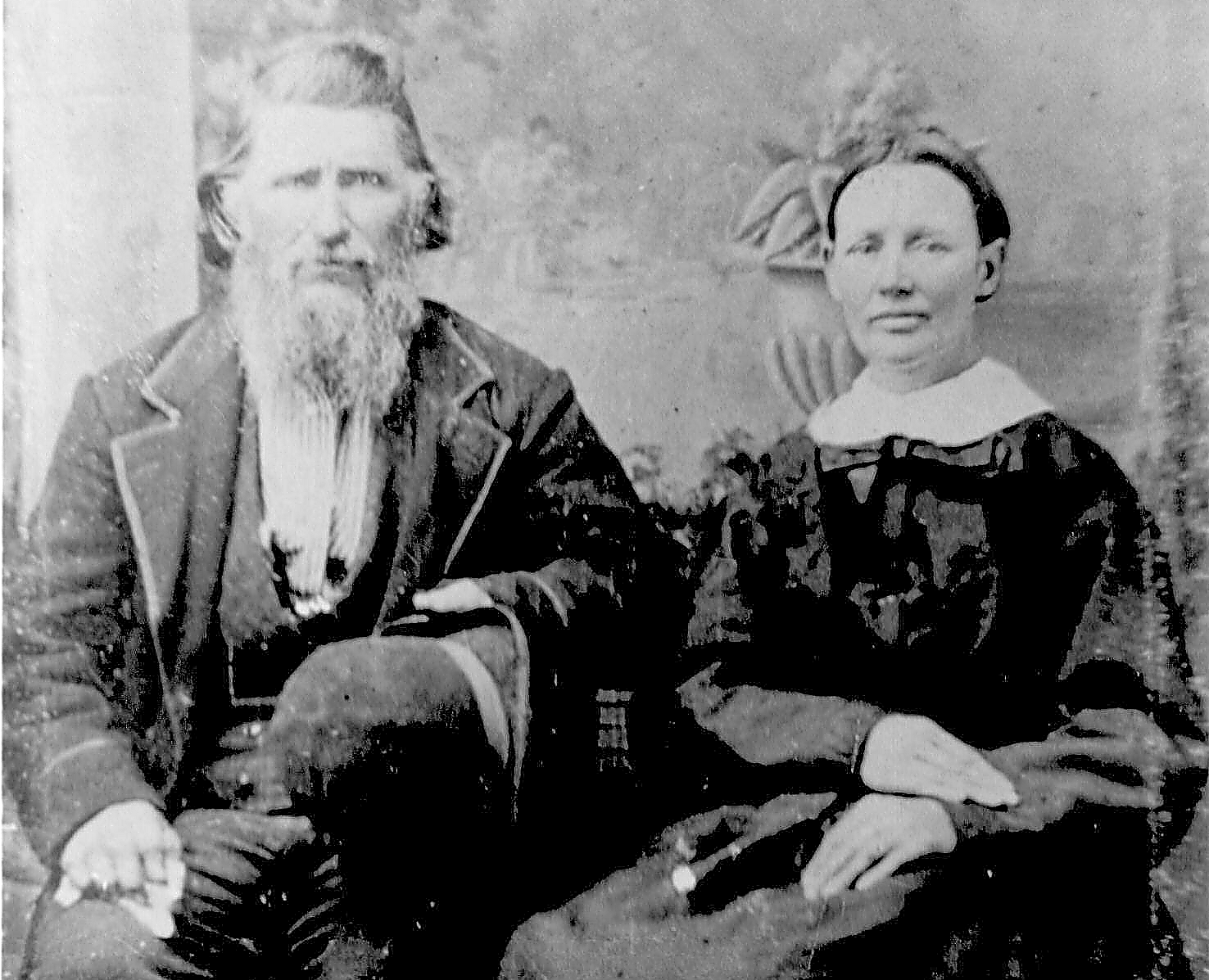
John B. and Mary Ann Gilliland Redding, about 1870 in Unionville, Missouri
In this Star Hitchers story, the author remembers a serendipitous discovery about his ancestors, thanks to a kindly lady in a small-town library. Submit your story at StarHitchers.com.
The Story
I asked my dad where his father was born. I was a boy and becoming curious about my family’s roots. “Somewhere in Missouri,” he said. “It has the word ‘Union’ in it.” I tucked that answer away.
Twenty years after my grandfather passed, I drove my mother from Illinois to Kansas to see her friend. On the way back, halfway through Missouri, I saw a sign that read “Unionville.” That rang a bell.
It was a long shot, but we had time. So I pulled into the little town and found the library.
A spindly lady, more my mother’s age than mine, approached me as I scanned titles on a shelf of local history. No doubt a library volunteer, she asked if she could help me. I said, “I may not be in the right town, but my grandfather might have been born here.”
The lady asked my family’s name. “Redding,” I said.
“Well, you’ve come to the right place,” she answered. “My name is Sarah Phillips, and I am related to the Reddings.”
It turns out that Sarah’s great-grandfather, John B. Redding, was my great-great grandfather.
Sarah took me to her house and gave me pictures of John B. Redding and his family. She handed me a stripe from his Civil War uniform and a day book he kept on his farm.
Sarah drove us to the country cemetery, next to a little Christian church. John B. and his wife Mary Ann [Gilliland] were buried. In that same church, Mary Ann, mother of ten children and not yet fifty years old, took her daughter’s hand, kneeled forward in her pew, and died. Folks said she just wore out.
Sarah pointed out the gravesites of John B.’s parents, Francis and Nancy Redding.
Sarah gave me a newspaper clipping celebrating Nancy’s 100th birthday and telling that she was born in Saluda, South Carolina, and married in Lexington, Missouri, in 1818.
Sarah was quite a find.
She told me of the family’s history, a history my father never knew. The Reddings came to Missouri from Iowa, and from Illinois before that. But originally they were from North Carolina. Here in Missouri, they were farmers and orchardists, and they were among the literate people who signed their names to legal documents.
Sarah was obviously proud of the Redding branch in her family history. She said I was the first one to come looking for family history, so she was glad to pass on the mementos to me.
What caught my attention in Sarah’s tales was the stripe from John B. Redding’s Civil War uniform. I was sure he must have been a victorious general. I wasn’t sure on which side he fought.
In fact, John B. was mustered in the Missouri Militia on the side of the Union for a brief time during the Civil War. He served nine days, on alert for Quantrill’s bushwhackers.
Back home, I dug into my history books. Who was Quantrill? Which side did Missouri take in the Civil War? I had plenty of questions.
Missouri was a border state in the Civil War, with sharp divisions in loyalty, even within families.
Missouri entered the Union in 1821 as a slave state.
Slaveowners from the South traveled up the Missouri River and settled in the bottomlands. The stretch of plantation land from St. Louis to Kansas City became known as Little Dixie.
Yeoman farmers and herders, not slave owners, typically settled in the northernmost and southernmost parts of Missouri where plantations were not feasible
Missouri and Kansas were deeply divided, and the powder keg exploded. Kansas acquired the name “Bleeding Kansas” for the carnage in the 1850s, even before the Civil War.
Border Ruffians from Missouri slipped into Kansas to terrorize anti-slavery settlers. Kansas Jayhawkers and Red Legs struck back, conducting raids into Missouri.
In August of 1863, William Quantrill led an irregular Confederate unit to sack Lawrence, Kansas. They killed some 150 males and burned 125 houses (Civil War on the Missouri-Kansas Border, Donald L. Gilmore).
Quantrill kept going, even as his bushwhackers split into factions. They raided pro-Union communities, including those in north and central Missouri. Unionville's militia was called out to guard against them.
I learned from family letters found online that Andrew Jackson Bradshaw, another of my great-grandfathers, lived in the same Missouri county as John B. Redding. When pro-slavery neighbors began harassing his family, he took them back to Illinois for several years.
The war divided the family in other ways. John B. Redding's cousin Nehemiah was killed in October 1863. Andrew Bradshaw's brother Jeremiah enlisted in the Union Army at 53; two of Jeremiah's sons also served, and one was killed. Another brother-in-law, James O. Campbell, a Union infantryman, died at Bentonville, North Carolina, in the war's final weeks.
In looking for my ancestors, I have learned that the Civil War divided families as surely as it divided states. Some of my ancestors, in Arkansas and Tennessee, sided with the South. But others, in those same states as well as Missouri and Kansas, sided with the North.
This tale comes together in 1875 when Almedia J. Bradshaw, daughter of Andrew, returned to Missouri from the family's sanctuary in Illinois and married Alfred F. Redding, son of John B.
They were my great-grandparents.
Alfred and Almedia, in that same village of Unionville, the town with the word “Union” in it, gave birth to Chancey Francis Redding in 1891. He was the grandfather whose birthplace I had sought and found, thanks to Sarah Phillips, a distant cousin who was in the right place at the right time for me.
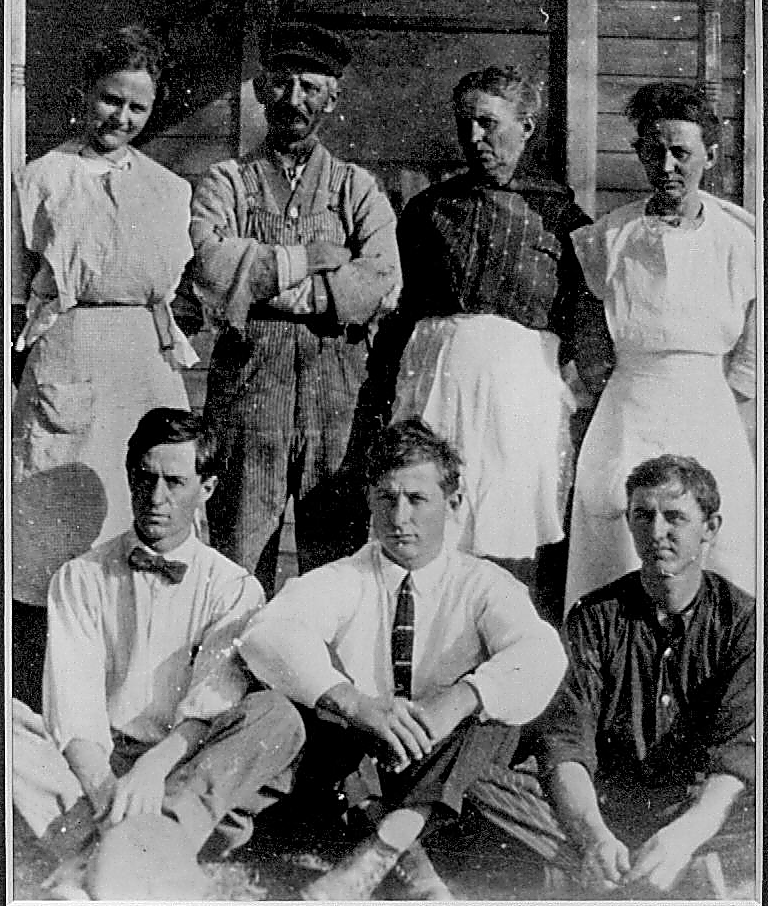
My grandfather, Chancey Francis Redding, center in front row between brothers Earl and Loyd. Back row: Chancey’s sister Stella, father Alfred, mother Almedia, and sister Elsie, about 1910 in Olathe, Kansas.
Threads to Follow
1. How did the Civil War divide families in Missouri and other border states?
2. What is the significance of the author’s serendipitous retrieval of family history that might otherwise have been lost?
3. How did the Kansas experience differ from that of Missouri?
4. What happened to communities such as Unionville after the war?
5. How might the experiences of one family reveal the larger history of the place where they lived?
Sources: Quantrill’s War, by Duane Schultz, 1996; Civil War on the Missouri-Kansas Border, by Donald L. Gilmore, 2008; Bloody Dawn: The Story of the Lawrence Massacre, by Thomas Goodrich, 1991; personal memories; family letters found online.
Author
Name: Sam Redding
Place of Residence: Towanda, McLean County, Illinois
Primary Sources: Quantrill’s War, by Duane Schultz, 1996; Civil War on the Missouri-Kansas Border, by Donald L. Gilmore, 2008; Bloody Dawn: The Story of the Lawrence Massacre, by Thomas Goodrich, 1991; personal memories; family letters found online.
Subject
Place reported: Unionville, Putnam County, Missouri
Timespan: 1850-91
Most descriptive characteristics: Historical
In this Star Hitchers story, the author remembers a serendipitous discovery about his ancestors, thanks to a kindly lady in a small-town library. Submit your story at StarHitchers.com.