
A Discovery That Changed Everything
By David L. Golwitzer
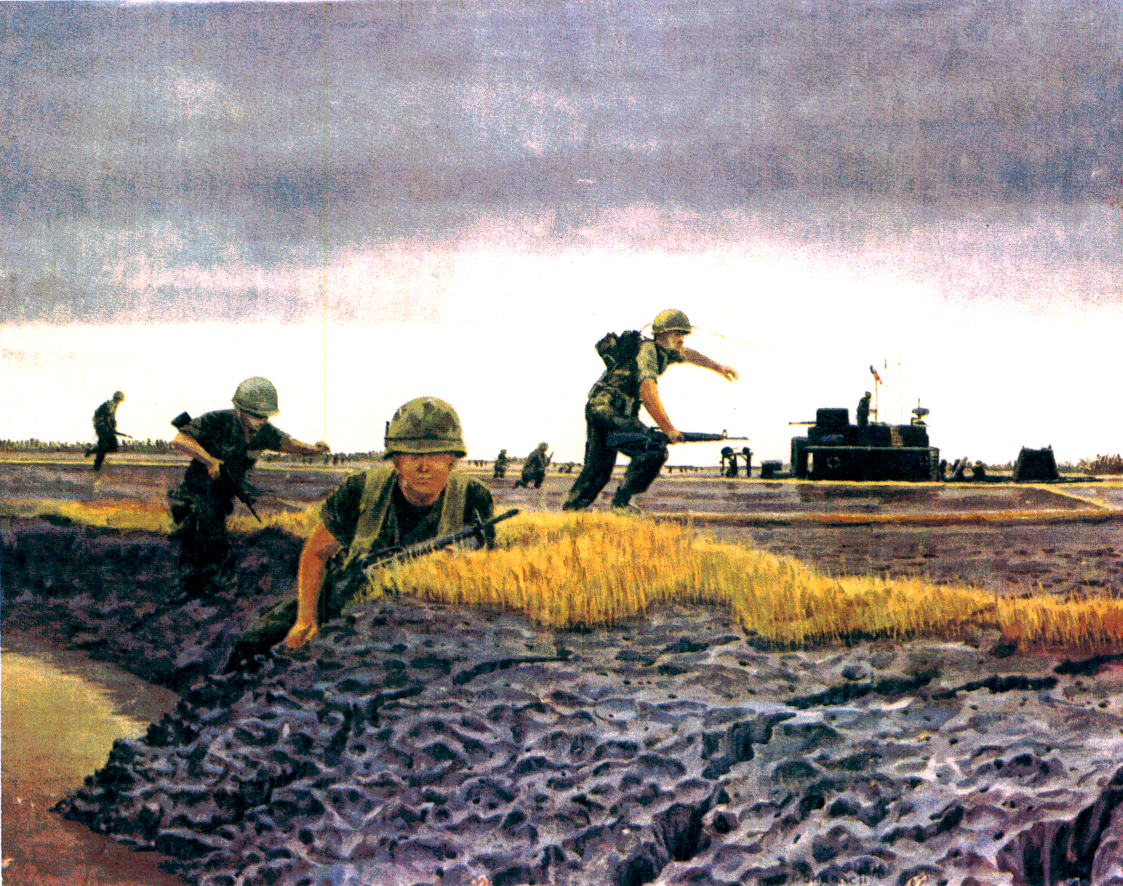
Artwork courtesy of Combat Art Team of the 19th Military History Detachment, provided by the Division Information Office and by 9th Signal Battalion.
This Star Hitchers story tells of a soldier’s jolting discovery many years after returning home. Tell your story at StarHitchers.com. Subscribe FREE at starhitchers.substack.com.
The Story
A Diagnosis
The telephone began ringing about 10:00 on a Saturday night. This was before cell phones, and calls that late were unusual. I answered, surprised to hear my doctor of many years.
"Dave, I would normally not call so late, but I have an appointment set up for you with an oncologist in Springfield at 10:00 Monday morning."
As you can imagine, it was quite a shock. I was in the prime of my life, enjoying an exciting and successful career. I had been feeling tired and exhausted for several weeks and had gone in for a checkup the day before. They drew blood, but no one had speculated about the cause of my weariness. I wasn’t expecting the results until the following week.
My doctor told me I had an exceptionally low red blood cell count, which explained my symptoms, along with an unusual white blood cell response. He didn’t tell me much about what to expect at Monday’s appointment. Frankly, I knew little about what oncologists did. I just knew they dealt with cancer.
I arrived at the appointment alone and with considerable trepidation. I had been worrying ever since the telephone call. Visiting an unfamiliar doctor without knowing what to expect is enough to create anxiety.
The doctor was direct about the suspected problem: leukemia. He wanted to perform several tests to determine the specific diagnosis because leukemia has many forms. My Friday blood tests had brought me to the oncologist, but they weren’t sufficient to establish a diagnosis.
I expected more blood tests, of course, but there was another procedure I had never heard of: a bone marrow aspiration.
The name sounded innocuous, but let me be specific. Think of a pair of brass knuckles with a short, hollow spear attached. I lay on my side while the doctor forcefully drove the instrument into my pelvic bone to extract a bone marrow sample. No antiseptic, no dreamlike medication such as you receive for a colonoscopy. Just as the doctor didn’t spare me, I won’t spare you. It hurt like hell. My mental picture of that doctor was not particularly flattering.
It took several days to get the results.
Diagnosis: Hairy Cell Leukemia (HCL)
The disease gets its name from abnormal white blood cells that have hairlike projections when viewed under a microscope. It is a rare blood cancer. In 1989, when I was diagnosed, the outlook was grim. The historical life expectancy for patients was only four to five years.
I decided not to tell anyone about that prognosis.
I was concerned about the future—for my wife and our 12-year-old son. I didn’t want to add the emotional burden of my diagnosis and prognosis to their lives.
I kept that dire prognosis secret for 37 years. My family knew I was being treated for a disease, but not that the odds of beating it were so much against me. I did not reveal the severity of my condition to a single person until the evening after I began writing this story. My wife, now in memory care after 54 years of marriage, will never know.
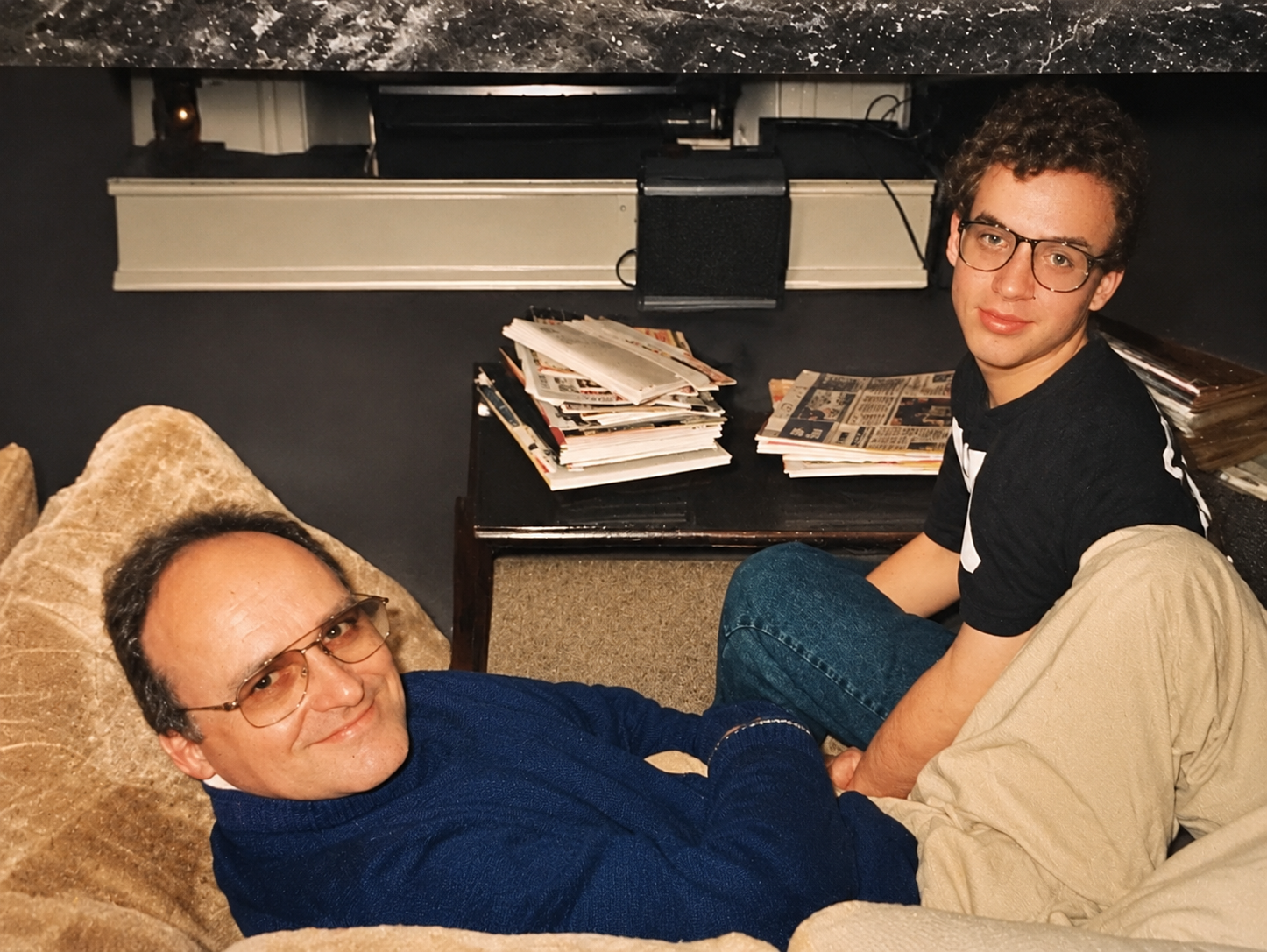
I did not reveal the severity of my condition to anyone, including my wife and son. Here with my son.
At the time, the initial treatment was to remove the spleen. The spleen filters the blood, and mine was becoming increasingly enlarged as it collected abnormal blood cells.
The surgery was scheduled, but I knew I had things to organize, so I delayed it for a month. I was still very tired and anemic, receiving blood transfusions every couple of weeks along with prednisone.
On the day of surgery, a good friend and neighbor—a surgical nurse—was part of the team. She came to my room afterward and jokingly said, “I did you a big favor today.” She had persuaded the surgical team to use a different contact antibiotic that would be easier on my body when removed.
She also described the scene in the operating room. As the surgeon removed my spleen, he remarked that it was like delivering a baby. It weighed five kilograms, about ten pounds.
You can live without your spleen, but your immune system is compromised. To this day, I remain alert to infections and other potential problems that may require additional attention.
There was no known cure for the disease, so after surgery the plan was to monitor my progress. Interferon, a new drug developed in the 1980s, was being used to treat my type of leukemia, but it was too early to know its long-term effectiveness. I continued to receive periodic blood transfusions to address the anemia.
I stepped away from actively managing my company for about eight weeks. Fortunately, I had chosen incredibly talented people who kept the business operating in my absence. I would show up for a few days at a time, but my heart wasn’t in it. I felt ill and depressed about the future. There was so much I wanted to do and so little time to do it.
Within a couple of years, I was plodding along, tired much of the time but still making plans for the future. I had completed my first year as a member of the local Lincoln Community High School Board. I had also decided to sell my house and move to Bloomington, where I would be closer to medical care and where I believed my wife and son would be better situated. I resigned from the school board.
I wasn’t satisfied with the information or support I was receiving at my periodic checkups, and my mother knew I wasn’t happy with my oncologist.
One evening, she called to tell me she had been reading Reader’s Digest. Many of you will remember the short blurbs that appeared at the bottom of various pages. One mentioned research into a new treatment for Hairy Cell Leukemia at MD Anderson Hospital in Houston, Texas.
I immediately called.
The research, it turned out, was being conducted at the University of Chicago Hospital, and they referred me there. At my first meeting with a couple of young research doctors, they ran tests and explained the state of the disease and its treatment. They were working on a new drug, but it was still years away from becoming available—and it might not work at all.
They explained that interferon was showing reliable results and extending patients’ lives, although relapses still occurred. They referred me to a new oncologist in Peoria who also worked in Bloomington. We arranged checkups every six months.
About a year later, for some inexplicable reason, I lost most of my eyesight over a two-week period. While driving on the freeway, I had to stop to read the overhead signs. I consulted an eye specialist at the University of Chicago Hospital and underwent several tests, but they couldn’t identify the cause. My eyesight gradually returned. We never determined whether the problem was connected to my other medical conditions.
Five years after my spleen was removed, my time had come. I was severely tired and run down, and my Chicago doctors were preparing to start me on interferon.
Then came an unexpected telephone call.
The drug they had been working on for years had received FDA approval. They canceled the planned interferon treatment and referred me to my local oncologist, who scheduled the new treatment for two weeks later.
The treatment was straightforward. I checked into BroMenn Hospital in Bloomington on a Sunday and checked out six days later. I didn’t know it at the time, but I had walked out cured.
The doctors were confident in the drug, but they didn’t yet have a large enough patient history to know exactly how it would affect everyone or whether the disease would return. They were watching to see how patients tolerated it and whether the disease came back. They believed it would extend lives. I just had to wait and see.
Well, wait I did.
More than three decades later, I am still here, with no relapse and no lasting side effects. I couldn’t be more pleased with the results.
My Peoria oncologist monitored me every six months for five years. At one appointment, he said they needed to perform another bone marrow aspiration. I wasn’t happy and reminded him of my previous experience. He said he couldn’t imagine what kind of doctor would perform that procedure without the appropriate dreamlike medication. In retrospect, I was angry about the pain, but grateful considering the ultimate outcome.
A Conversation in Naples
In 2016, a casual encounter sent me down another path of remembrance, discovery, and perhaps a small sense of redemption.
I was sitting at an outdoor café on Fifth Avenue in Naples, Florida, having coffee with a retired doctor friend. A friend of his happened by and joined us. He had just returned from a VA hospital, where he had received a checkup for an illness he had developed after serving in Vietnam in 1968–69.
His experience caught my attention. He had used VA medical services rather than the usual civilian medical system for his post-military care and had received disability compensation. His illness had developed about 30 years after his military service and was among the conditions the VA recognized as associated with Agent Orange exposure.
My mind was working at light speed.
I, too, had served in Vietnam in 1968–69, in the Mekong Delta. Years later, I had developed two diseases: Hairy Cell Leukemia and diabetes. I knew about the Agent Orange controversy because it had been in the national news, but I had not been involved with the VA since leaving the Army. It had never occurred to me to investigate whether my medical problems might be connected to my military service.
I had served in Vietnam as an infantryman and carried a radio. We went on countless operations through the Mekong Delta, traveling on foot, by air, and by truck.
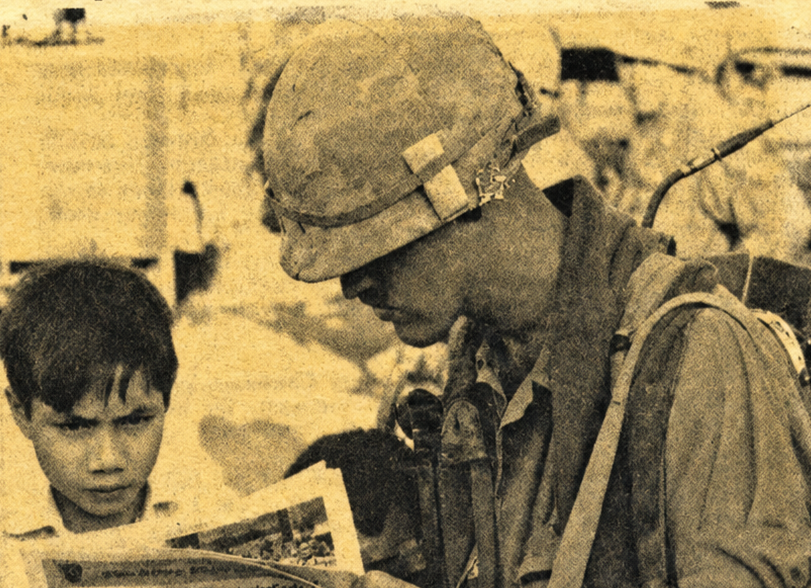
After stopping for a break while on an operation, I was photographed by an Army photographer for the Division Newspaper. I was reading and sharing a copy of the last edition with some local kids.
Most of our operations in the Delta followed a similar pattern.
The company would load up in helicopters at a fire support base some distance outside Dong Tam, the 9th Infantry Division base camp. They would fly us to some place outside of nowhere. We would bail out, fan out, then sit around, rest, and wait for nightfall. Each platoon would slowly move to a preassigned place, encircle an area—a village or an overgrown nipa palm area—and set up ambush positions. We took turns staying awake through the night. Occasionally, an unaware enemy would move into the area and into the trap. Sometimes, though, the encounter would involve a squad or more. Then “all hell would break loose.”
In the morning, we would close the circle and see what we had caught.
On one of these missions, on a dark, moonless night, “all hell broke loose,” and I lost a good friend. His name was Paul Motley. He was next to me, about five feet away, when he lost his life.
We walked through countless rice paddies bordered by ten-foot-wide rows of nipa and mangrove palms, scrubby palm trees, and undergrowth. In many areas, the military had sprayed Agent Orange to kill the vegetation and eliminate hiding places and potential ambush sites. We sometimes watched the aircraft make those passes. We routinely moved through the defoliated areas without giving the spraying a second thought. In fact, we were thankful the vegetation had been removed.
I wasn’t happy about being in Vietnam, and I wasn’t sure why the government had sent me there or why so many of my fellow soldiers had been asked to sacrifice their lives. For what?
Returning home brought its own difficulties. I saw the negative reactions people had toward the war and, sometimes, toward me. They weren’t necessarily overt. More often, people simply avoided me. After two years in the Army, I wasn’t the same person I had been before leaving. It took time to shed my military identity and find my place again.
To this day, I rarely talk about my time in Vietnam. But not a week goes by that I don’t recall the night Paul died. He had a young family; I didn’t. Maybe I felt some guilt that it wasn’t me. I don’t know. Whatever the reason, the experience taught me to appreciate life because tomorrow is never guaranteed.
Interestingly, my father, who served in World War II and participated in the Normandy D-Day invasion, rarely talked about his military service either. After returning from Vietnam, I finally understood why.
Perhaps telling this story will be cathartic, allowing me to put some of those memories to rest.
While still in Naples, I went online and began researching. I found extensive information about Agent Orange and the litigation that had resulted in a list of diseases the VA recognized as associated with exposure.
And there they were:
Hairy Cell Leukemia
Type 2 Diabetes
I was shocked.
I had potentially missed out on 27 years of financial support. More importantly, I had missed the recognition and support that came with acknowledging the consequences of my military service. I admit I was angry.
When I returned to central Illinois, I located the nearest VA office, in Peoria, and made an appointment. They explained the procedures for filing a claim. I gathered documentation of my illnesses and treatments and was referred to a VA center in Chicago for an examination.
After reviewing my records, they sent me home to await a decision.
I didn’t have to wait long. The determination letter awarded me a 20 percent disability rating for Hairy Cell Leukemia and another 20 percent for diabetes.
When I questioned the 20 percent rating for HCL, I was told that if I had applied in 1989, I would have received a rating of 90 to 100 percent because my survival was unlikely. After 27 years, however, the VA knew the outcome: I had survived.
I was angry that my survival and ability to cope with the disease seemed to be the reason for a lower rating. But I understood that life is too short and precious to spend it worrying about what might have been.
The war followed me home, for sure, but it did not get the best of me.
Threads to Follow
Threads to Follow are questions to prompt further discovery, conversation, and discussion.
Facing a Life-Threatening Diagnosis. How does a person respond when suddenly confronted with a serious or potentially fatal illness? What decisions must be made, and how does the uncertainty affect relationships, family responsibilities, work, and plans for the future? When is keeping a diagnosis or prognosis private an act of protection, and when does sharing the burden become important?
Living with Uncertainty. Medical diagnoses do not always come with clear predictions or guarantees. How do patients and their families cope with the fear of the unknown, changing treatments, and the possibility that life may be shorter than expected? What gives people the determination to keep making plans and moving forward?
Agent Orange and Its Legacy. What was Agent Orange, why was it used in Vietnam, and what did the military know about its potential health consequences? How did the list of illnesses associated with exposure develop, and how has the VA's recognition of those illnesses changed over time?
The Men Who Didn't Talk. Dave rarely discussed his experiences in Vietnam. His father, a World War II veteran who participated in the D-Day invasion, was similarly reluctant to talk about his service. Why have so many veterans chosen silence? What makes some experiences difficult to share, even with family?
The Cost of War. Dave remembers the death of his friend Paul Motley, who was only a few feet away when he was killed. What happens to those who survive when friends and fellow soldiers do not? How does that experience shape the way a person views life afterward?
Sources
The author’s memories and conversations are the primary sources for this story. Medical information was substantiated with the following references:
· National Cancer Institute – Hairy Cell Leukemia Treatment
· Hairy Cell Leukemia: Present and Future Directions
· VA – Chronic B-cell Leukemias and Agent Orange
· VA – Veterans' Diseases Associated with Agent Orange