
Story 05: Tracks and Lanes
The Story of Towanda, My Hometown
By Sam Redding
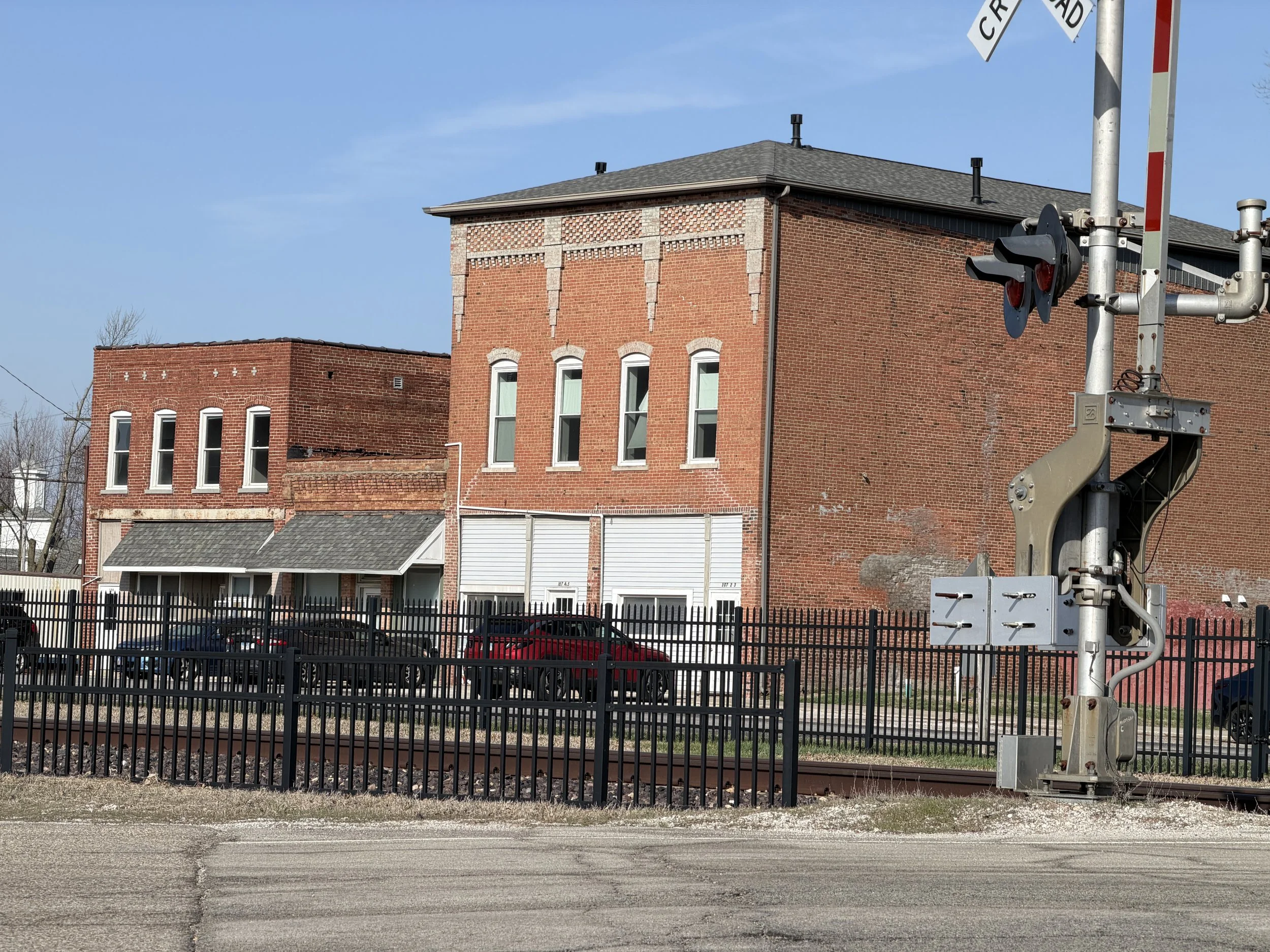
Main Street today, with tracks running along it.
The Story
Like many small towns across America, Towanda was shaped by the great forces that built the country—railroads, highways, and the steady movement of people chasing opportunity. But it was also shaped in quieter ways: by families, by routines, by the small moments that stay with us long after we leave.
This is a story about those forces—the tracks and lanes that run through a town, and through a life.
This essay is taken from a fuller account of Towanda, which you can find at StarHitchers.com. Jeff Collins’s story of growing up in Towanda is also posted there, in essay form and in full.
Where the Tracks Still Run
Towanda, Illinois, rose from the prairie in 1854 when the railroad came through. The line connected Chicago to the river towns to the south, and like so many Midwestern communities, Towanda took shape along those rails.
The tracks still run along Main Street today.
When I was a boy, the depot stood across from the brick storefronts of the business district. Each day, the mail train roared through, snatching a canvas mailbag from a pole and tossing another off in exchange. For a moment, it felt like the whole world passed through Towanda.
In a way, it did.
Before the Railroad, and After
Long before the railroad, the Kickapoo camped along Money Creek, just north of present-day Towanda. One story says the name “Towanda” came from a chief celebrating the birth of twins—“two in one day.” Another traces it to Pennsylvania, from a Delaware word meaning “burial place.”
By the 1930s, a second line of movement came through town: U.S. Route 66.
The Mother Road brought travelers, business, and a sense that Towanda sat along something bigger than itself. After World War II, the highway widened. Then, in the 1970s, Interstate 55 shifted traffic north, bypassing the town.
Each new route changed Towanda. None erased it.
Arriving in Towanda
I arrived in 1955, a third grader riding beside my father in a ’37 Chevy, our dog stretched out in the back seat. We had come from Kansas, following an opportunity offered by a preacher named Amos Barton.
Barton supplemented his ministry by contracting concrete work, eventually turning it into a business that carried crews across the Midwest. He brought that operation to Towanda to pursue larger jobs—highways, airport runways, expansion work in Chicago.
My father signed on. Towanda became home.
My mother and younger brothers followed by train. On the Fourth of July, my youngest brother was born—the first Illinois native in our family.
Life Along the Lanes
By then, Towanda was as much a highway town as a railroad town.
Fern’s Texaco, along old 66, served coffee to farmers in the morning and hamburgers to travelers all day. Down the road, the Delco truck stop offered bunks for drivers and milkshakes for teenagers.
We kids made our own circuits. We biked to school and around town, parked our bikes to play pickup baseball at the schoolyard, and pedaled to Money Creek to fish. In the summertime, we left in the morning and came home by suppertime. In the late evenings, we met in backyards to play night games until the 10:00 curfew whistle sent us in for the night.
As a twelve-year-old, I biked across four lanes of Route 66 to pick up my stack of Chicago Daily Newspapers at Jerry Henderson’s farm garage. I delivered the papers, hurrying on winter days to get home before the sun went down.
It was a wide, unstructured freedom that’s harder to find now.
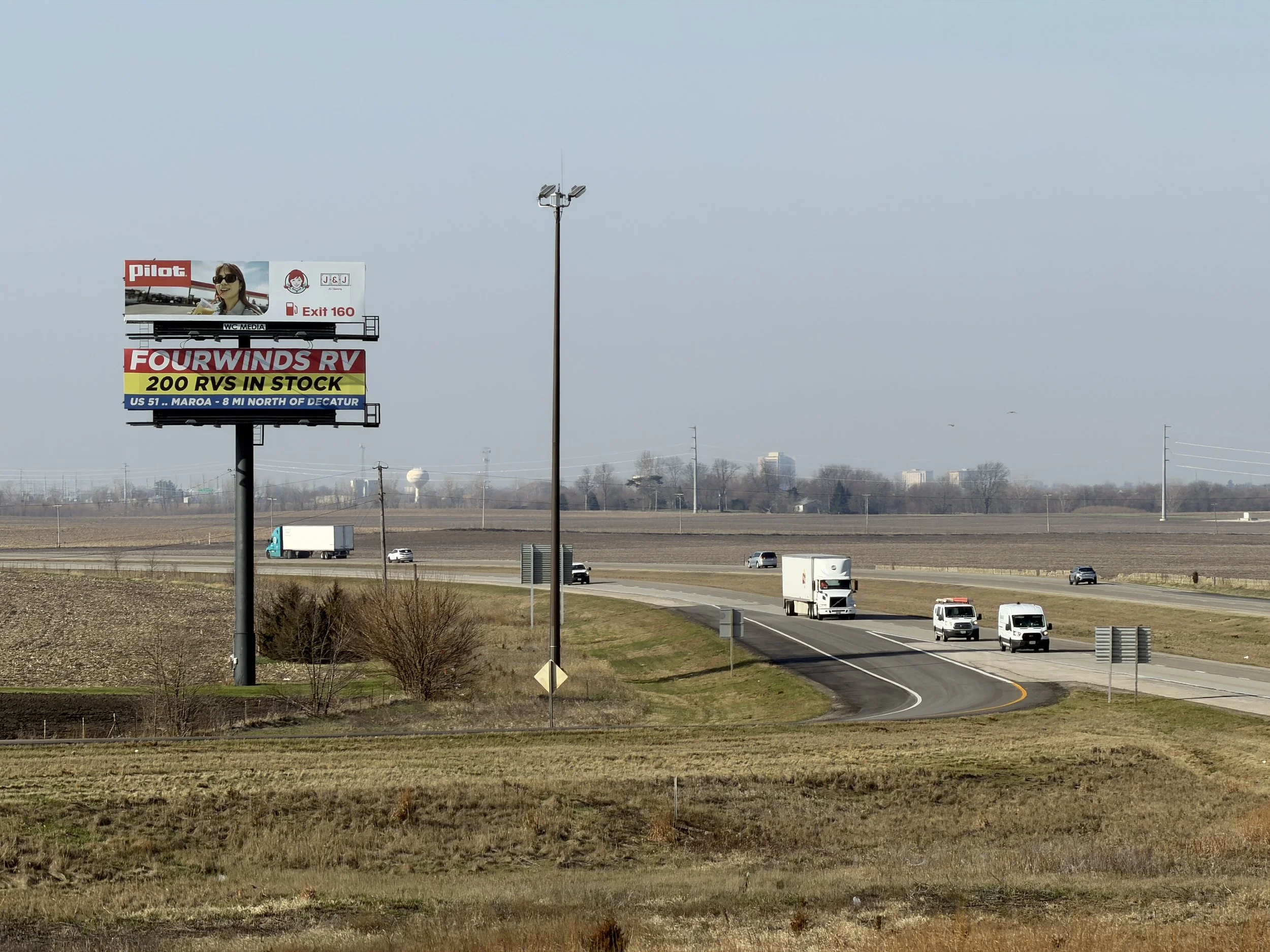
Exit to Towanda from Interstate 55, Normal and Illinois State University in distance.
Work, Family, and the Shape of a Town
Barton’s company became a center of gravity for many families, including ours. The men worked the crews; the kids mowed Barton lawns, hauled equipment, learned the rhythms of labor.
Towanda itself was full of families—often spanning generations. Grandparents, aunts, uncles, cousins—woven together in ways that made the town feel larger than it was.
Over time, that began to change.
As Jeff Collins remembers, people who now live in Towanda typically work, shop, and spend their time in nearby Bloomington-Normal. The old Main Street grocery stores are gone, along with the daily interactions they fostered.
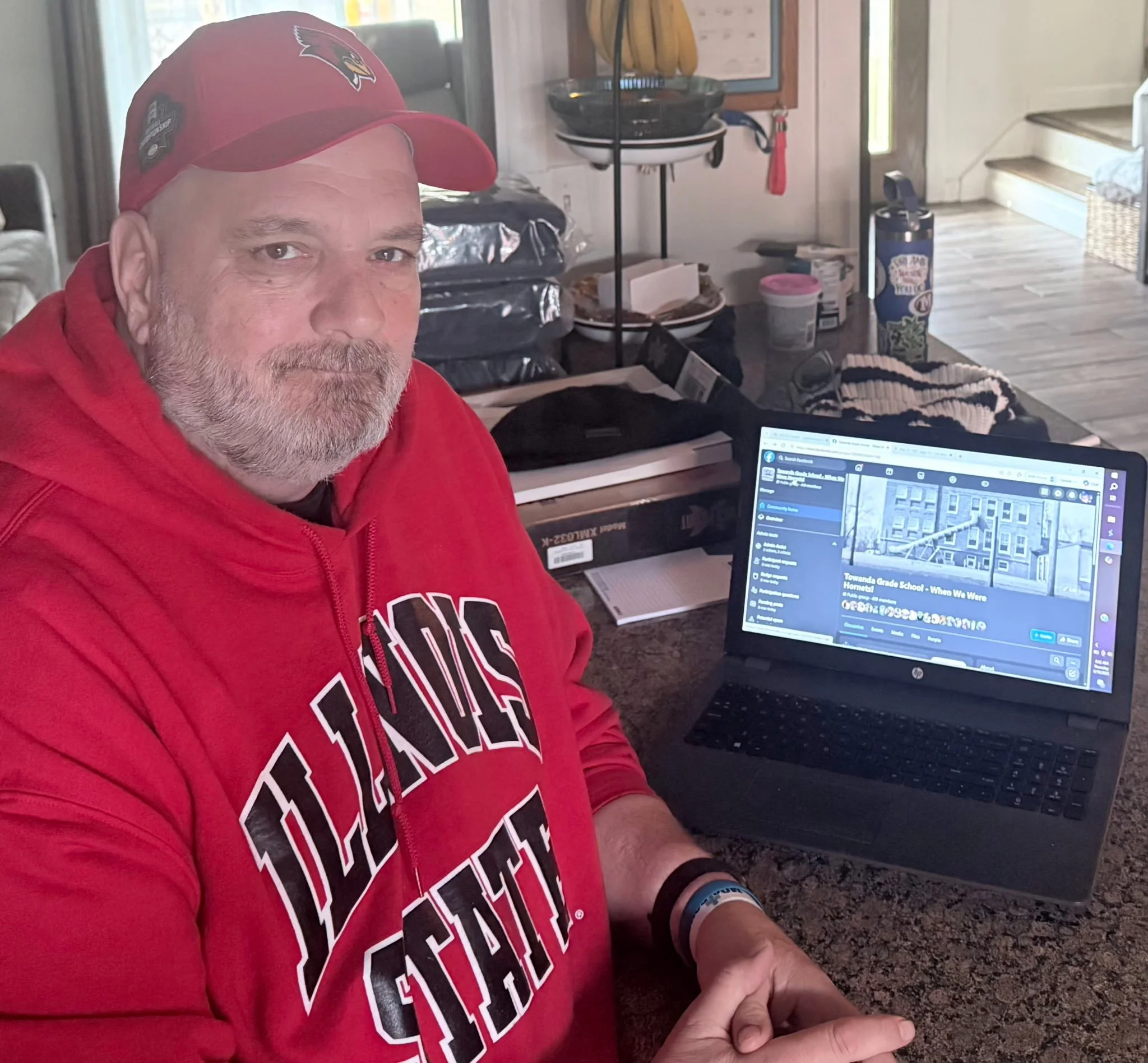
Jeff Collins, Towanda native, historian, and creator of When We Were Hornets site on Facebook.
Looking Back—and Forward
Mayor Don Williams remembers when the Fourth of July festival stretched across two full days—games, dances, crowds filling the park.
“It’s still a major event,” he says, “but it could be more again.”
He sees potential in reconnecting Towanda to its neighbors and to its past—especially through Route 66 initiatives that bring visitors back onto the old road.
Towanda may be bounded by rail lines, highways, and farmland, but its future, he believes, depends on connection.
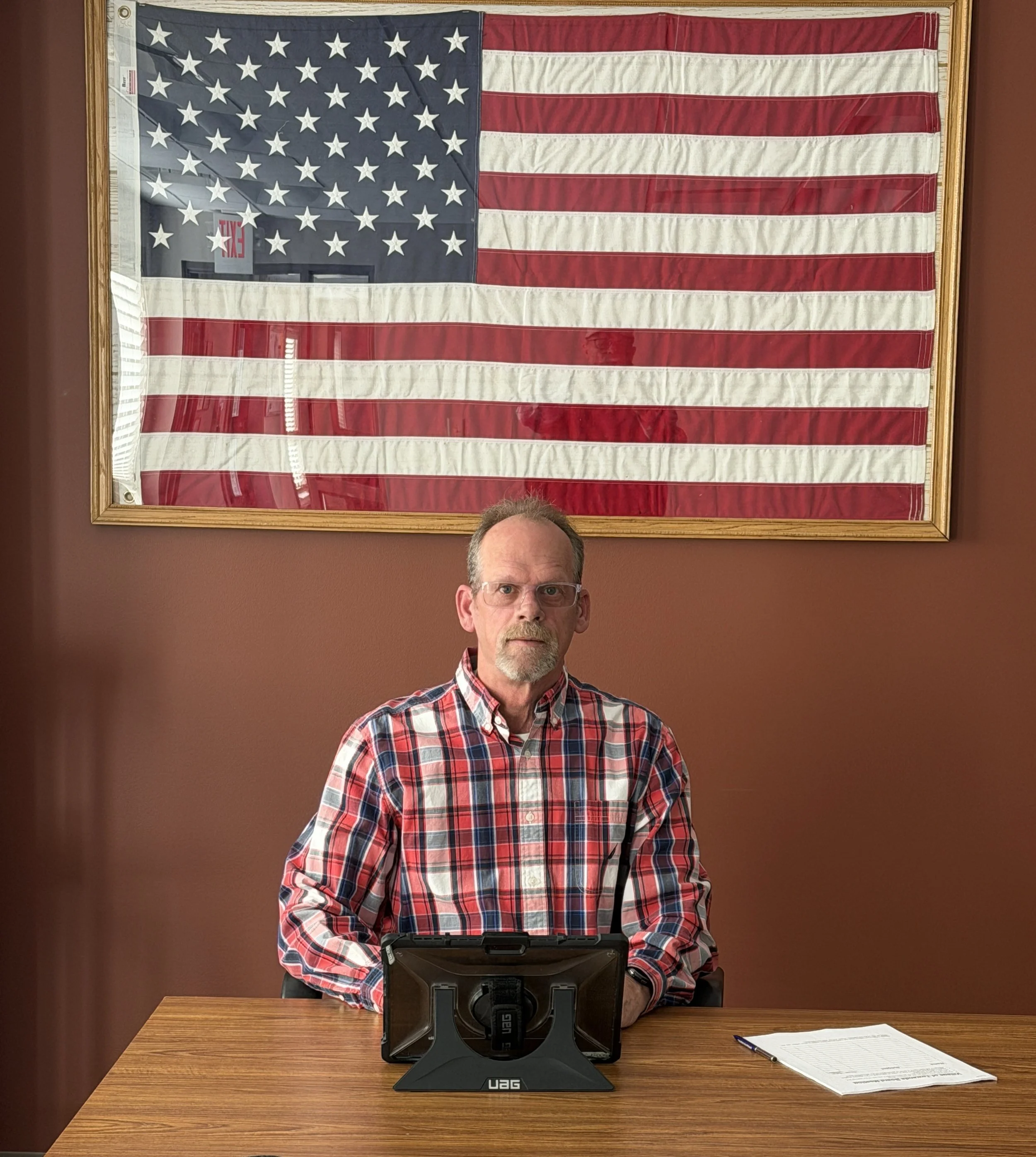
Don Williams, Towanda mayor with a vision.
Holding On to What Matters
Some of that connection comes from people who invest in the place.
Randi and Dave Howell did just that when they purchased Duncan Manor, a long-neglected 19th-century mansion just outside town. What began as a challenge became a home, a business, and a gathering place.
Randi, who runs the post office, became something of an anchor during a chaotic Christmas season when rural mail delivery broke down. Residents came in person to collect their mail, and for a time, the post office became a daily meeting place again.
It wasn’t planned. But it felt familiar.
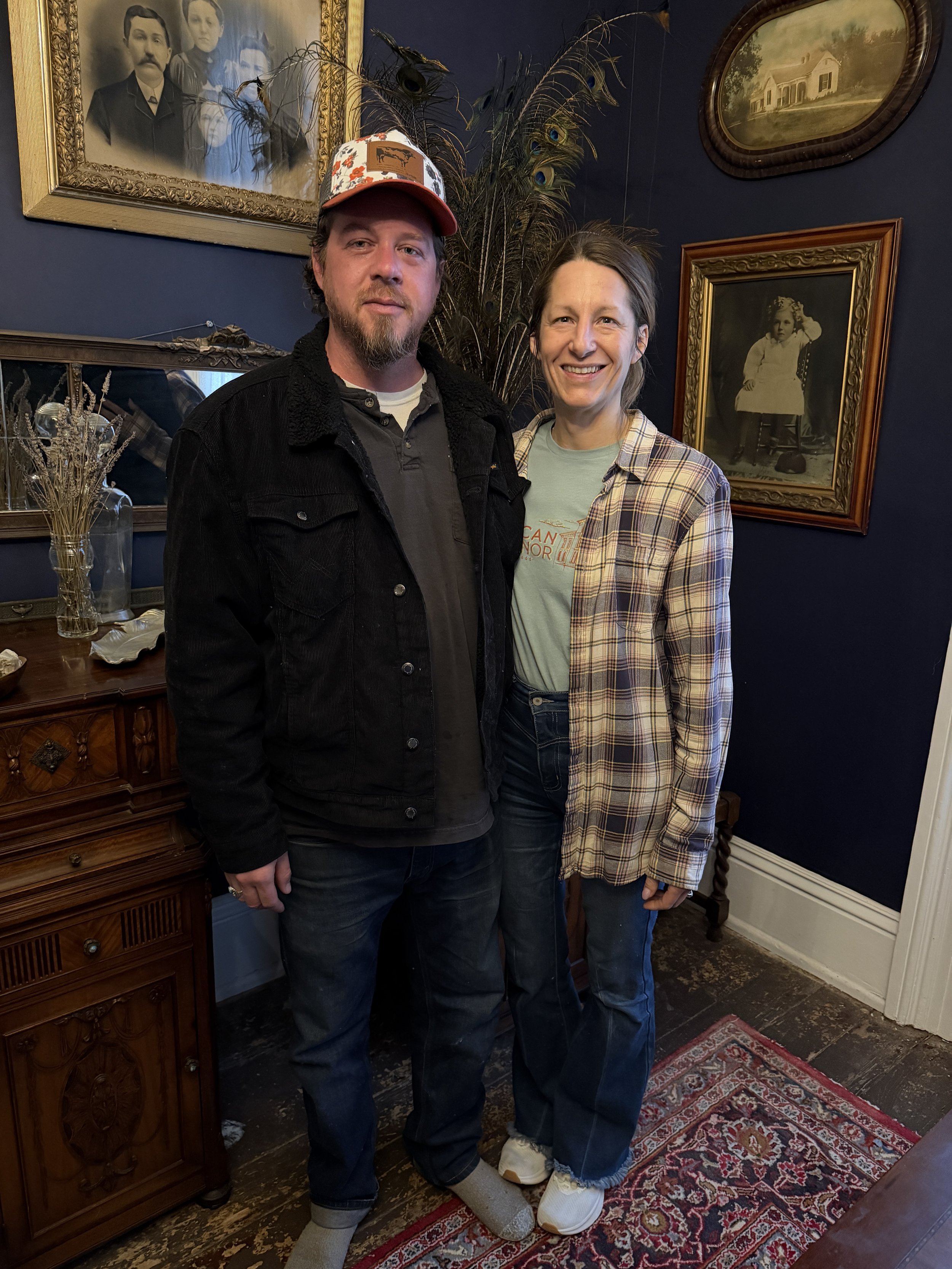
Dave and Randi Howell, preserving the past and serving the community.
The Moments That Stay
What stays with me most are the small things.
Standing in the park on Memorial Day, supposed to echo Taps on my trumpet—and losing my nerve, escaping through the park, across the tracks, and back home.
Biking across the four-lane highway to swim in Sucker Hole at Money Creek, where I acquired enough skill to later become a mediocre college swimmer. But it meant pulling leeches from our legs after we swam.
My mother, stretching every dollar, riding the school bus to her new job as a cook at the high school until someone complained—then continuing her work closer to home at Towanda Grade School without fuss.
The dances at the Community Building next to the railroad tracks, and the floor shuddering as a train rattled by.
The night a snowstorm closed Route 66 and weary travelers slept on the Grade School gym floor and in downtown businesses that opened their doors.
These aren’t the stories that make history books.
But they are the ones that make a place.
Where the Lines Meet
Towanda has always been shaped by movement—by rails and roads, by people arriving and leaving, by change that comes whether invited or not.
The tracks still run along Main Street. The old lanes of Route 66 still trace their path through town. New routes have shifted the flow, but not erased what came before.
Towanda doesn’t stand still.
But it endures.
And for me, it remains the place where those lines—past and present, memory and movement—meet.
Threads to Follow
1. In the 19th century, towns were planted where railroads were planned to pass. By what process was land obtained by railroad companies for their tracks?
2. What is the history of the Kickapoo Tribe after leaving central Illinois. What forced their departure?
3. What was the impetus behind the construction of the national interstate highway system after World War II?
4. Does the change described for Towanda over the years follow identifiable national patterns, or is it unique to small towns? What are the patterns?
An Invitation
This is the kind of story I hope to tell here—stories of places that may seem ordinary at first glance but reveal something deeper the longer you look.
Towanda is just one small town along a railroad line and an old highway. But like so many places across the country, it carries within it the marks of larger forces—movement, change, endurance—and the quieter imprint of the people who lived their lives there.
If you have a story of a place or a person that has stayed with you, I’d like to hear it. You can find more at StarHitchers.com, and you’re always welcome to contribute a story of your own.
Place by place, person by person, we’re building something larger—the story of America itself.
Author
Name: Sam Redding
Place of Residence: Towanda, McLean, Illinois
Primary Sources:
Interviews: Jeff Collins, local historian; Randi and Dave Howell, proprietors of the Duncan Manor; Don Williams, mayor
Publications: Towanda, McLean County, Illinois 1826-1976, by Elizabeth Jones Winter and Mildred Hirst Roberts (1976)
Websites: Illinois Digital Archives - Illinois Digital Archives; https://villageoftowanda.org/; Duncan Manor House & Gardens – Duncan Manor House & Gardens; Towanda District Library | Visit, Discover, Enjoy
Other: Rachel Ballinger, director of Towanda Public Library; the McLean County History Museum’s library.
Subject
Title: Tracks and Lanes (Essay)
Subtitle: The story of Towanda, my hometown
Place reported: Towanda, Illinois
Timespan: 1820-2026
Most descriptive characteristics: Historical, Agricultural, Educational