
Story 04: Everybody Knows Her Name
The Story of Sacajawea
By Sam Redding
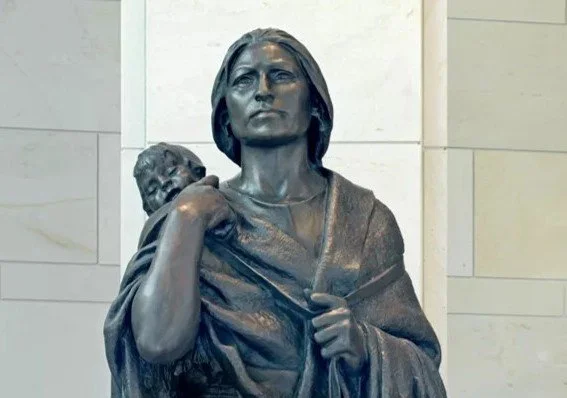
The Story
Most Americans recognize “Sacajawea,” even if they are unsure how to pronounce it. We remember the familiar schoolbook image: a young Native woman in buckskin, carrying a baby while guiding Lewis and Clark westward into the wilderness.
But beyond that image, many of us know very little.
In her own lifetime, Sacajawea came from almost unimaginable obscurity. Born among the Shoshone sometime around 1788, she was still a child when Hidatsa warriors attacked her people during a buffalo hunt and carried her away captive. Living among the Hidatsa, she performed the hard labor expected of women—scraping hides, gathering food, grinding corn. She also learned their language.
By age thirteen she had been traded to Toussaint Charbonneau, a French-Canadian fur trader nearly three times her age. Charbonneau treated Sacajawea and another captured Shoshone girl, Otter Woman, as his wives.
Nothing in those early years suggested that history would remember her name.
That changed in the winter of 1804.
The Corps of Discovery, led by Meriwether Lewis and William Clark, had established winter quarters among the Mandan villages in present-day North Dakota. Preparing to travel farther west in the spring, Lewis and Clark sought interpreters who could help them communicate with tribes beyond the Missouri River.
Charbonneau offered his services. More importantly, Sacajawea spoke Shoshone.
In February of 1805, Sacajawea gave birth to a son, Jean Baptiste Charbonneau. She called him Pahmpi. Only weeks later, carrying the infant on her back, she joined the expedition as it moved westward into lands few Americans had ever seen.
At first glance, her contribution might seem modest beside the celebrated achievements of Lewis and Clark. She commanded no troops, held no office, and left behind no written journal.
Yet she became indispensable.
Historian Craig Fehrman, in The Vast Enterprise, describes Sacajawea as a stabilizing and reassuring presence within the expedition. Traveling with a nursing infant through dangerous country, she gathered roots and berries, repaired clothing, prepared food, and helped interpret among tribes the Corps encountered along the way.
Her presence also communicated something important to Native peoples. A war party did not travel with women carrying babies. Seeing Sacajawea with the Corps signaled peaceful intentions.
As the expedition pushed westward, Sacajawea’s own emotions deepened the journey. She believed the route might eventually lead back to her Shoshone homeland.
In August 1805, it did.
Walking into a broad valley near the Rocky Mountains, Sacajawea suddenly recognized the country of her childhood. According to Fehrman, she ran ahead joyfully to greet mounted Shoshone riders. Then came an even greater shock: the Shoshone chief who approached the expedition proved to be her brother, Cameahwait.
The reunion was emotional and bittersweet. Many members of her family had died during the years of her captivity. But the meeting also proved critical to the expedition. The Shoshone supplied horses that allowed Lewis and Clark to continue west across the mountains.
Soon afterward the Corps encountered the Nez Perce people in present-day Idaho.
According to later tradition, Sacajawea identified the people Lewis and Clark encountered with a term associated with tribes known for nose piercing. French traders eventually called them “Nez Perce,” meaning “Pierced Nose,” though the Nimipuu themselves did not commonly practice nose piercing. The name endured.
My own interest in Sacajawea eventually led me there.
Like many Americans, I first encountered her in a fourth-grade textbook. Years later, Stephen Ambrose’s Undaunted Courage deepened my fascination with the Lewis and Clark expedition and with Sacajawea herself.
Then, in 2008, my friend and colleague Dr. Bernadette Anderson—an enrolled member of the Nez Perce Tribe—invited me to visit Lapwai, Idaho, the tribal headquarters.
The trip transformed the story for me.
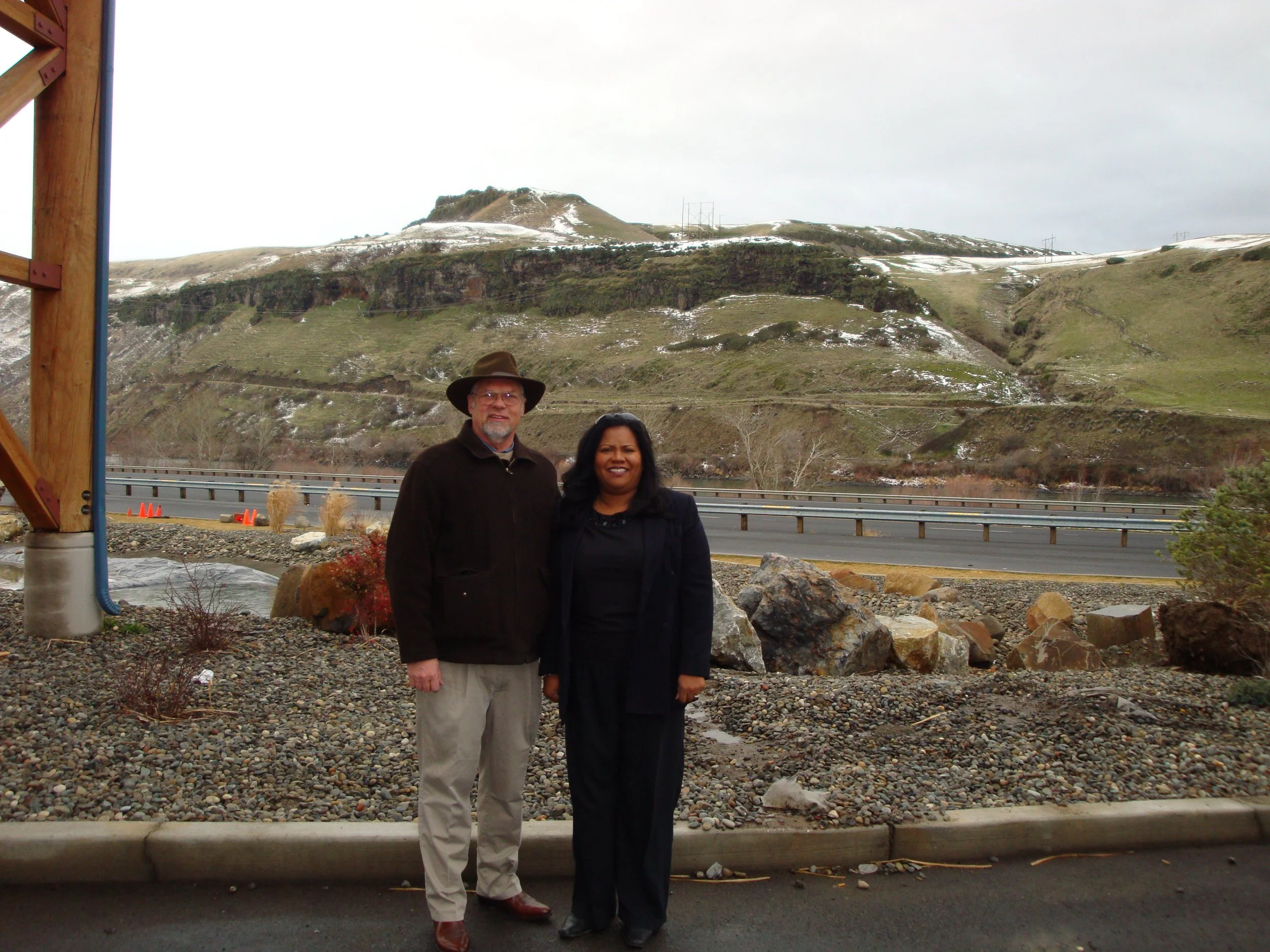
Bernadette and me, Nez Perce reservation, Idaho, 2008
Bernadette’s Uncle Emmit and Aunt Jackie drove us through country once occupied almost entirely by the Nez Perce, or Nimipuu people. At the time of Lewis and Clark, they lived across some seventeen million acres of the Northwest. Today their reservation is only a fraction of that homeland.
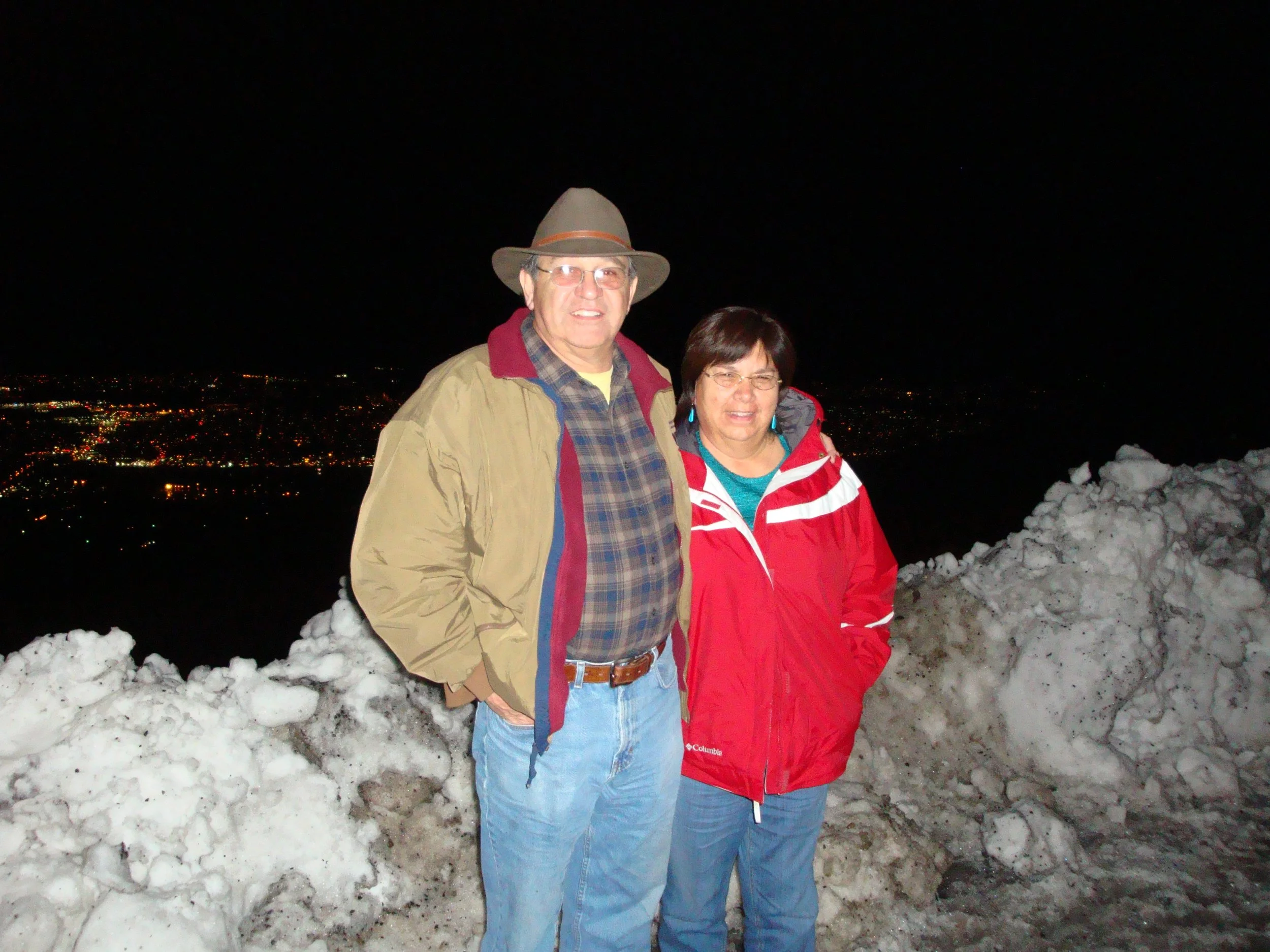
Emmit and Jackie Taylor, Bernadette’s aunt and uncle, our hosts in Lapwai
I remember especially hearing Emmit tell the story of Chief Joseph and Looking Glass leading their people on the long retreat toward Canada in 1877, pursued through the Bitterroot Mountains by the U.S. Army.
I also remember visiting the Tribe’s Appaloosa horse herd and seeing the rivers that had sustained the Nez Perce for centuries. A horse lover, I was enthralled with Tribe’s herd. My son Tommy had raised an Appaloosa filly for 4-H. Nearly extinguished by the U.S. Army in 1877, stragglers from the herd were captured by a white settler and returned to the Tribe to begin their breeding project again.
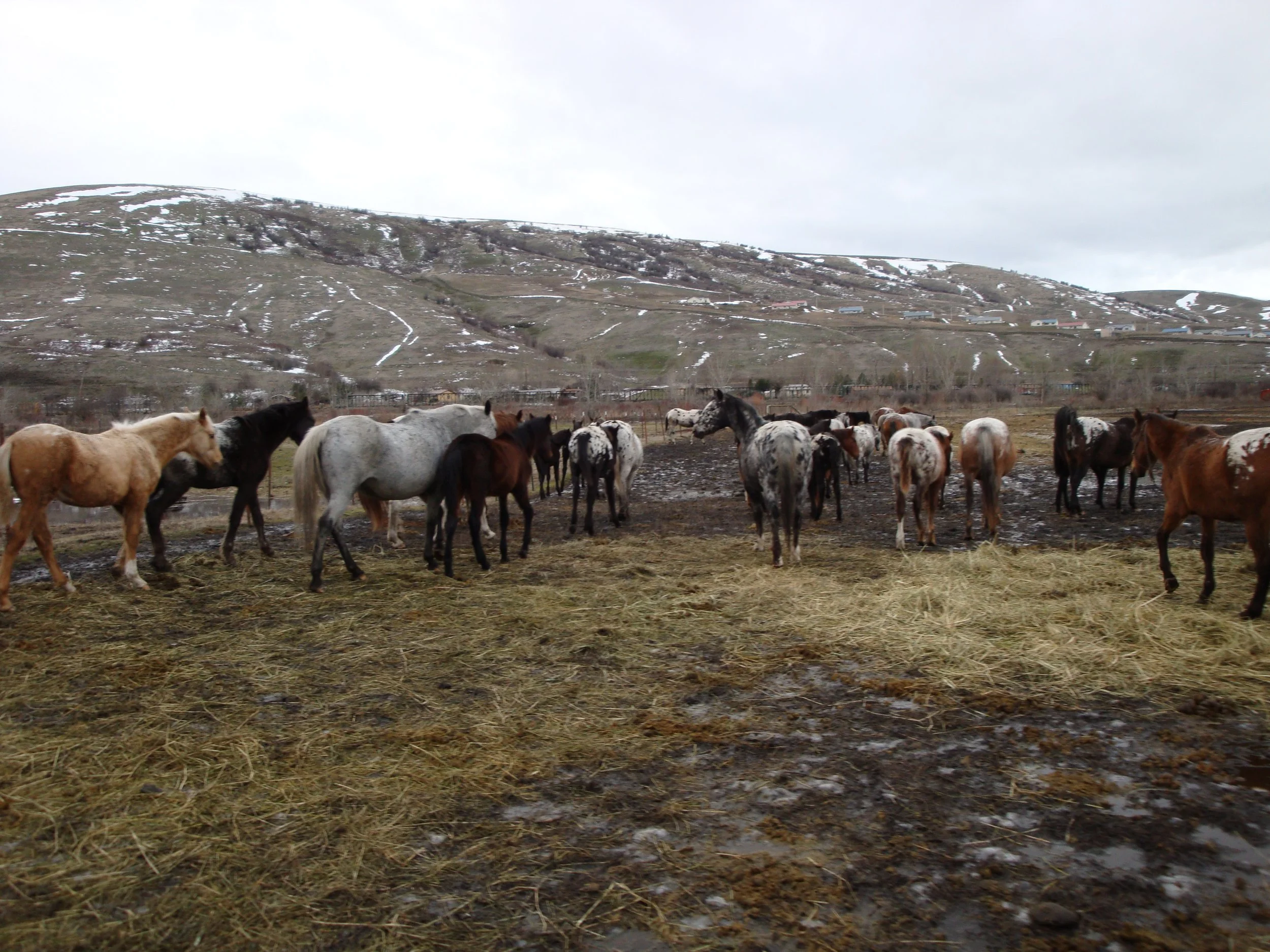
The Nez Perce tribal herd in 2008.
The landscape made the old stories feel immediate and alive.
Sacajawea herself would not live long after the expedition ended.
The Corps reached St. Louis in September 1806 after traveling roughly 8,000 miles. Sacajawea later returned with Charbonneau to the northern plains. In 1812, after giving birth to a daughter named Lisette, she apparently died at about age twenty-five.
Even details of her death remain uncertain.
Her son, Jean Baptiste, survived to live an extraordinary life of his own—traveling through Europe, speaking several languages, working as a fur trader and interpreter, and eventually dying in Oregon in 1866.
Sacajawea herself slipped quickly back into obscurity.
Yet her name endured.
Why?
Partly because the Lewis and Clark expedition occupies such an important place in the American imagination. It was a story of exploration, ambition, science, conquest, cultural encounter, and national expansion.
But Sacajawea endures in memory for another reason as well.
Among frontiersmen, soldiers, politicians, traders, and explorers of the American West, she stands out as a young woman carried into history by circumstance yet remembered for courage, endurance, and grace. She entered the expedition as a captive teenager with an infant son. She became one of the most recognized figures in the story of the American West.
Then she disappeared again into the shadows of history.
She left no memoir, commanded no army, founded no movement, and exercised little control over the course of her own life. Yet across two centuries of American memory, her story endured.
Everybody knows her name. Few know how hard her life truly was.
Threads to Follow
What events prompted President Jefferson to form the Corps of Discovery and specify its responsibilities?
The history of the Nez Perce’s Appaloosa horses is a great story in its own right. Do some research and discover what is known about the Tribal herd.
How did the Nez Perce War and Chief Joseph’s 1877 retreat reflect the changing American West that Sacajawea had once traveled?
What roles did Native and frontier women play in the fur trade world beyond the better-known story of Sacajawea?
Today, a statue of Sacajawea stands in the U.S. Capitol Visitor Center. Where else is she memorialized today?
The Corps of Discovery encountered more than seventy tribes. How did the cultures differ among the Mandan, Nez Perce, Shoshone, and Chinook?
Author
Name: Sam Redding
Place of Residence: Towanda, McLean County, Illinois
Primary Sources: Visits to Nez Perce reservation in Idaho
Undaunted Courage: Meriwether Lewis, Thomas Jefferson, and the Opening of the American West, by Stephen E. Ambrose, 1996
The Last Indian War: The Nez Perce Story, by Elliott West, 2009
The Vast Enterprise: A New History of Lewis & Clark, by Craig Fehrman, 2026
Photographs of Main Character(s): Yes
Subject
Title: Everybody Knows Her Name
Subtitle: The obscure but celebrated life of Sacajawea (1788-1812)
Name of Subject at Birth: Sacajawea NONE
Birth Date: 1788
Birthplace: Lemhi river valley in current-day Idaho
Name of Subject at Death: Sacajawea Charbonneau
Death Date: 1812
Place of Death: Current-day North Dakota
Spouse(s): Toussaint Charbonneau
Other Key Locations: Current-day Idaho and North Dakota; Missouri
Most admirable qualities: Resilience, Devotion to Family, Generosity