
Story 06: A Quaker Englishman in America
The life of Christopher Allen (1804-1876)
By Sam Redding
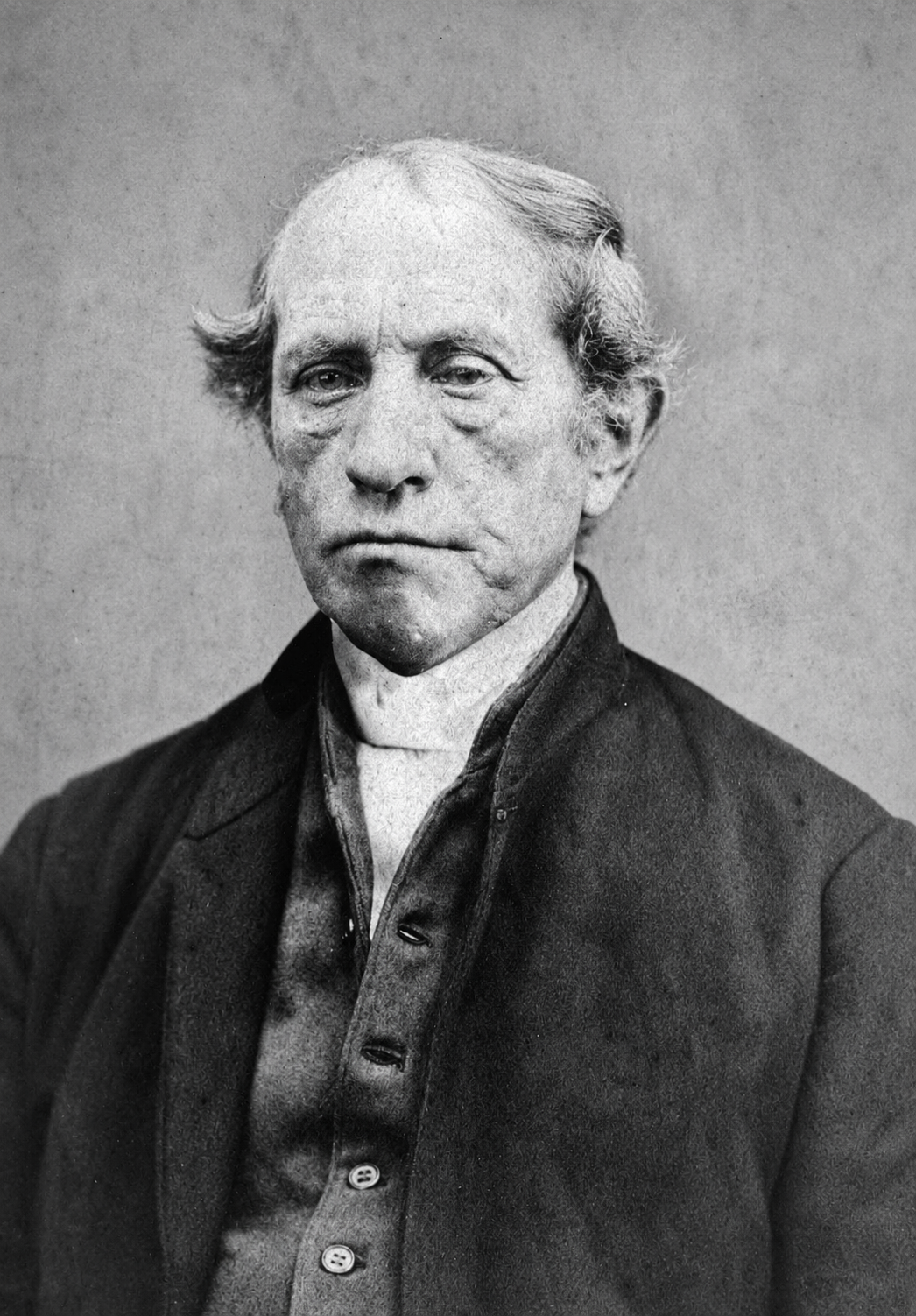
Christopher Allen, about 1870
The Story
My Aunt Beth believed every boy born in our family ought to be named Christopher.
My mother resisted the campaign four times.
Only later did I learn why Aunt Beth cared so much about the name. Christopher Allen, her great-grandfather, had died thirty years before she was born, yet his memory still lingered in the family like a story not fully told.
What Aunt Beth possessed was more than family legend. She had a copy of a journal Christopher Allen kept during a return visit to England in 1866, more than twenty years after he had emigrated to America. Years later, another relative mailed me a letter Christopher wrote in 1874 to a nephew. Those papers opened a window into the life of a man I came to admire deeply.
As a boy, my impressions of Englishmen came mostly from Western movies. The English character was usually overdressed, nervous, and helpless on horseback — the opposite of Matt Dillon. But Christopher Allen was something else entirely.
In the 1874 letter, he described his childhood in the cotton mills of Manchester:
“My going to day school terminated when I was about ten years of age…”
He explained that he could barely read or write when he was sent into factory labor. Working thirteen hours a day, he carried books in his shirt while tending machinery, solving arithmetic problems during stolen moments at the carding machines.
Night school proved nearly impossible after such exhausting work, so he educated himself through borrowed books and a free grammar class taught by a benevolent Quaker named Ralph Nicholson. Christopher never forgot the kindness shown to poor boys hungry for learning.
His letter concluded:
“This sketch will give thee some idea of my opportunities fifty years ago.”
Those words changed my understanding of him. Christopher Allen was not a timid Englishman from fiction. He was a working-class laborer who fought his way into an education.
Years later, another clue arrived in the mail.
A cousin in Kansas sent me a postcard mailed in 1907 to my grandfather, Sam Allen. On the front was a picture of an old mill labeled:
“Flour Mill, Winona, O.”
The mill had once belonged to Christopher Allen.
In May 1993, my mother and I drove from Illinois to Cleveland to visit my brother Rodney and his wife Meredith. Rod and I decided to continue eastward to Winona, Ohio, hoping to uncover something of the Allen family’s beginnings in America.
At a modern Quaker church in Winona, a receptionist directed us to an elderly man living outside town who, she thought, might be connected to the Allens.
She was right.
Albert Gamble, age eighty-six, welcomed us into his home with his wife Ethel. Albert’s grandmother Amelia Whinnery had been Christopher Allen’s daughter.
Albert showed us a large steel stencil nearly thirty inches across. Cut into the metal were the words:
Albion Mill — S. Allen
He explained that Christopher had owned the local grist mill during the 1850s and that “S. Allen” referred to one of Christopher’s sons who managed it.
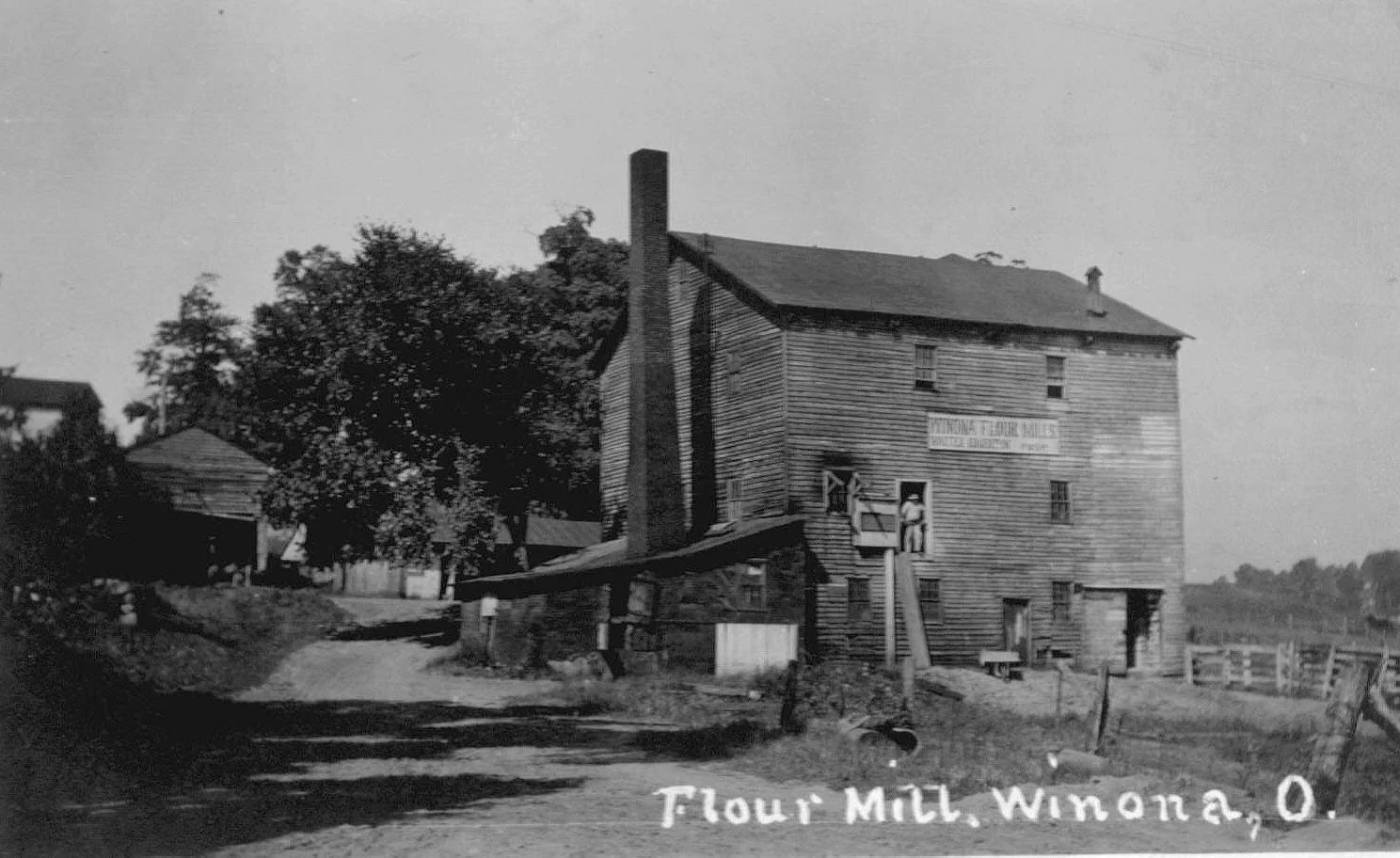
Albion Mill in Winona, Ohio, owned by Christopher Allen in 1850s
Afterward Rod and I visited the old meeting house, the one Albert and Ethel still attended. We found the mill, drove the rolling countryside around Sandy Spring Creek, and stood where Christopher Allen had once farmed after crossing an ocean to begin again.
Gradually, through letters, family records, and the help of researchers in England, Christopher’s story came together.
He was born on the Isle of Wight in 1804, the son of Richard and Martha Fosbrook Allen. By 1814 the family had settled in Manchester, where Christopher, his mother, and several siblings worked in the cotton mills.
His father struggled with alcoholism. In his journal Christopher recalled walking his father home from taverns late at night. Yet he also wrote that Richard eventually overcame his addiction through the influence of Methodists and returned to church late in life.
Christopher escaped the mills through relentless self-education. He became apprenticed as a brass founder and married Amelia Bennett in Manchester in 1826. Around 1835 he embraced the Quaker faith, whose emphasis on discipline, literacy, and moral seriousness clearly suited his temperament.
But England in the 1840s was unsettled ground.
Industrial Manchester was crowded with poverty and political agitation. The hated Corn Laws protected wealthy landowners while driving food prices upward for laborers. Christopher and Amelia, now raising children, chose to leave.
In 1842 the family sailed from Liverpool aboard the Roscuis, bound for New York.
The Allens settled near Cleveland, where Christopher established a brass foundry. About 1850 he purchased farmland and a grist mill near Winona, Ohio. Tragedy soon followed. Amelia died in 1851 just as the family was becoming established. Two years later Christopher married Abigail Stratton Reed, a Quaker widow.
The quiet Quaker communities of eastern Ohio stood near the center of one of America’s greatest moral crises.
Salem, Ohio, only a few miles from Winona, had become a center of abolitionism. Speakers there included William Lloyd Garrison, Susan B. Anthony, Horace Mann, and Ralph Waldo Emerson.
Quakers despised slavery, yet their faith also condemned violence. The coming of the Civil War divided many Quaker families.
Some young men joined the antislavery struggle in Kansas. Others remained committed pacifists. Christopher’s own son Richard — my great-grandfather — moved west to Kansas, left the Quakers, and enlisted in the Union Army in 1862.
Albert Gamble told me that the war years deeply strained Quaker communities like Winona. Men who agreed slavery was evil differed bitterly over whether Christians could take up arms against it.
After the war, Christopher returned to England for a visit in 1866. There he reunited with old friends, attended Quaker meetings, and published a poem in a Manchester newspaper. Its opening lines revealed how divided his affections had become:
“Land of my sires, my Native Land
England, to visit thee…”
Yet the poem quickly turned back toward Ohio, the adopted homeland where he had built his life and family.
By 1870 Christopher was listed in the census as a retired farmer living in Winona with Abigail and his daughter Mary, a teacher at the public school he had helped establish.
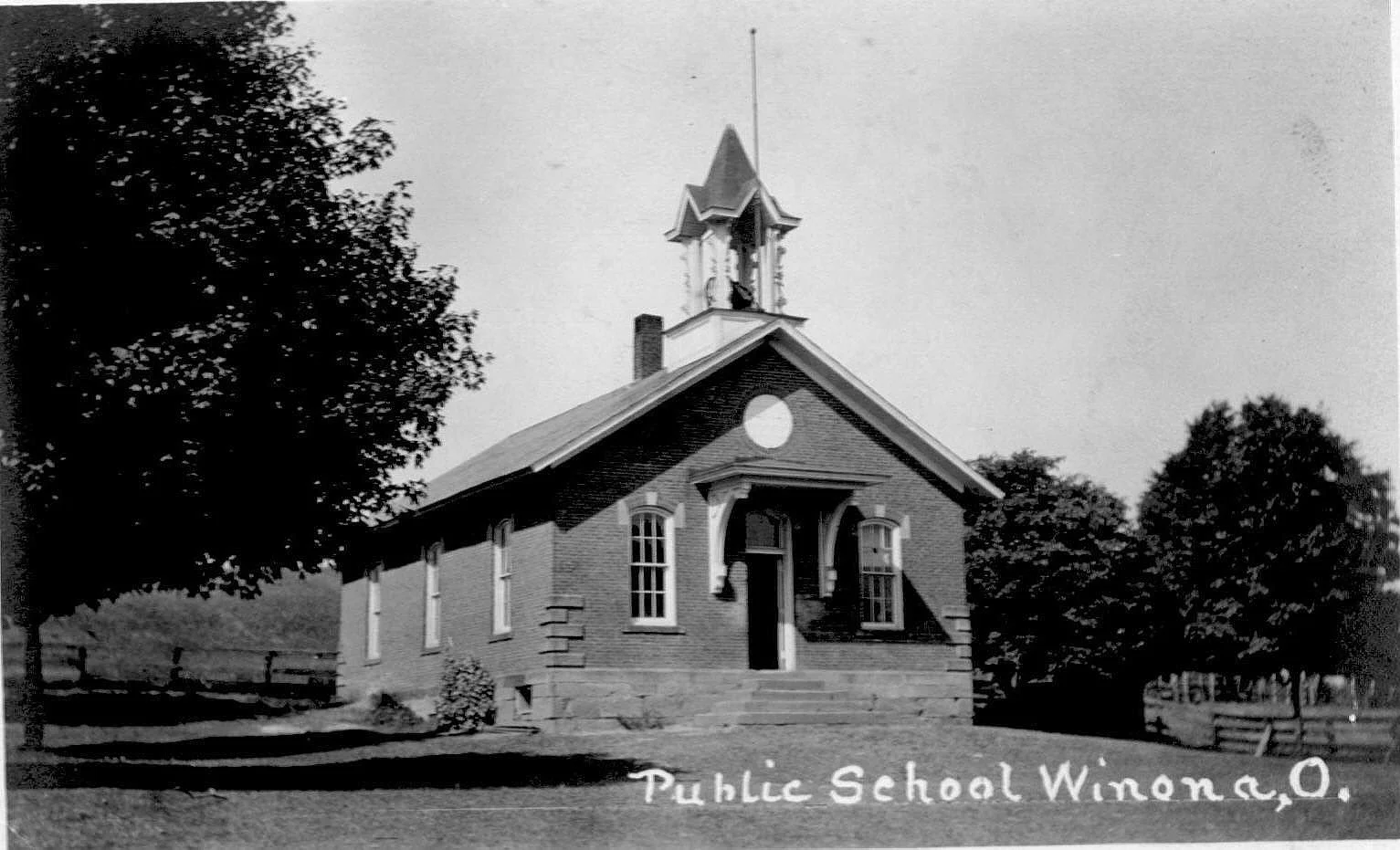
Christopher and Abigail both died in 1876 and were buried behind the old meeting house at Winona.
Nearly sixty years later, a relative described him this way in a local centennial booklet:
“Grandfather Christopher Allen was a genuine Englishman…”
The writer noted that Christopher’s descendants had spread westward into Iowa, Kansas, and California — farmers, blacksmiths, teachers, students.
That may be the real story of Christopher Allen.
A poor mill boy in Manchester educated himself one borrowed book at a time. He learned a skilled trade, crossed the Atlantic, rebuilt his life in Ohio, and raised a family that scattered across America.
Most people leave little trace behind them. Christopher Allen left letters, journals, a poem, a gravestone in a Quaker cemetery, and generations of descendants who carried his determination westward.
With every new fragment I uncovered about his life, my respect for him deepened — and so did my gratitude.
Threads to Follow
1. How did self-education change the lives of working-class people during the Industrial Revolution? Christopher Allen had almost no formal schooling, yet educated himself through borrowed books and determination. How common was this among factory workers in England and America?
2. Why did so many immigrants leave England for America in the 1840s? What economic, political, and social conditions pushed families like the Allens to leave industrial cities such as Manchester and begin again across the Atlantic?
3. How did Quaker beliefs shape American reform movements? Quakers opposed slavery, promoted education, and emphasized moral discipline — but many struggled with the question of war during the Civil War. How did Quaker communities influence abolitionism and other reforms in the nineteenth century?
4. What happens to family identity as generations move westward across America? Christopher Allen’s descendants spread from Ohio into Kansas, Iowa, and California. How did migration reshape family traditions, beliefs, occupations, and memories?
5. How do historians reconstruct the lives of ordinary people? This story was pieced together from letters, journals, postcards, census records, gravestones, and conversations with descendants. What sources are most valuable in recovering the lives of people who never became famous?
Author
Name: Sam Redding
Place of Residence: Towanda, McLean County, Illinois
Primary Sources: Primary Sources: Subject's journal, family correspondence, Michael Sharpe (genealogist; www.writingthepast.co.uk), Ancestry.com
Subject
Title: A Quaker Englishman in America
Subtitle: The life of Christopher Allen (1804-1876)
Name of Subject at Birth: Christopher Allen
Birth Date: April 14, 1804
Birthplace: Newport, Isle of Wight, England
Name of Subject at Death: Christopher Allen
Death Date: 1876
Place of Death: Winona, Ohio
Spouse(s): Amelia Bennett and Abigail Stratton
Other Key Locations: Birmingham, England; Manchester, England; Cleveland, Ohio; Winona, Ohio
Most admirable qualities: Faith, Devotion to Family, Hard Work