
Story 07: Why Danvers?
A Question for the Ages
By Sam Redding
In this Star Hitchers story, the author sets out of understand why his wife’s family settled in Danvers and why they didn’t stay. Tell your story at StarHitchers.com
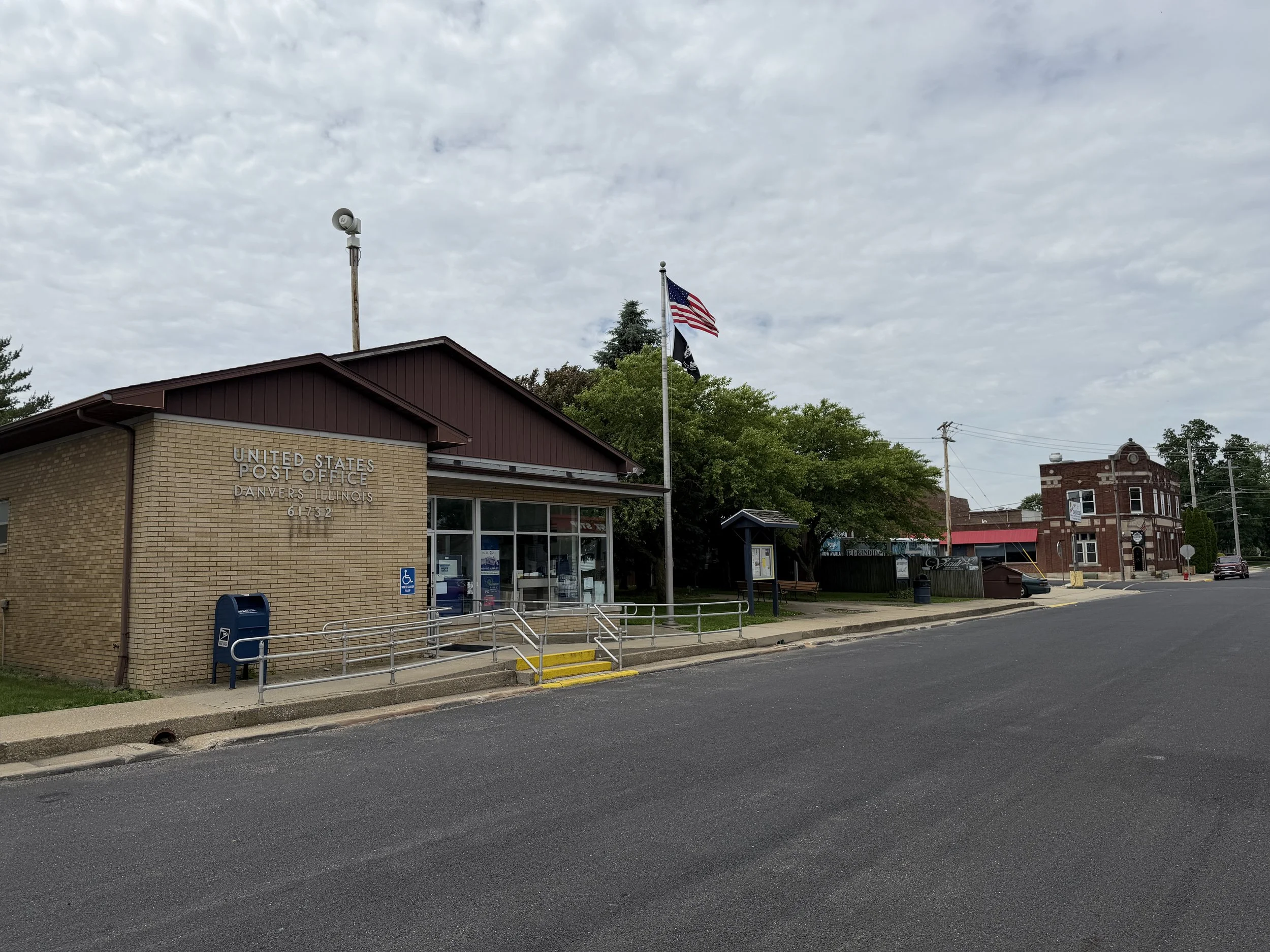
Danvers, Illinois, 2026
The Story
One of the pleasures of family history is solving mysteries.
The mystery usually begins with a small question.
Mine was this:
Why Danvers?
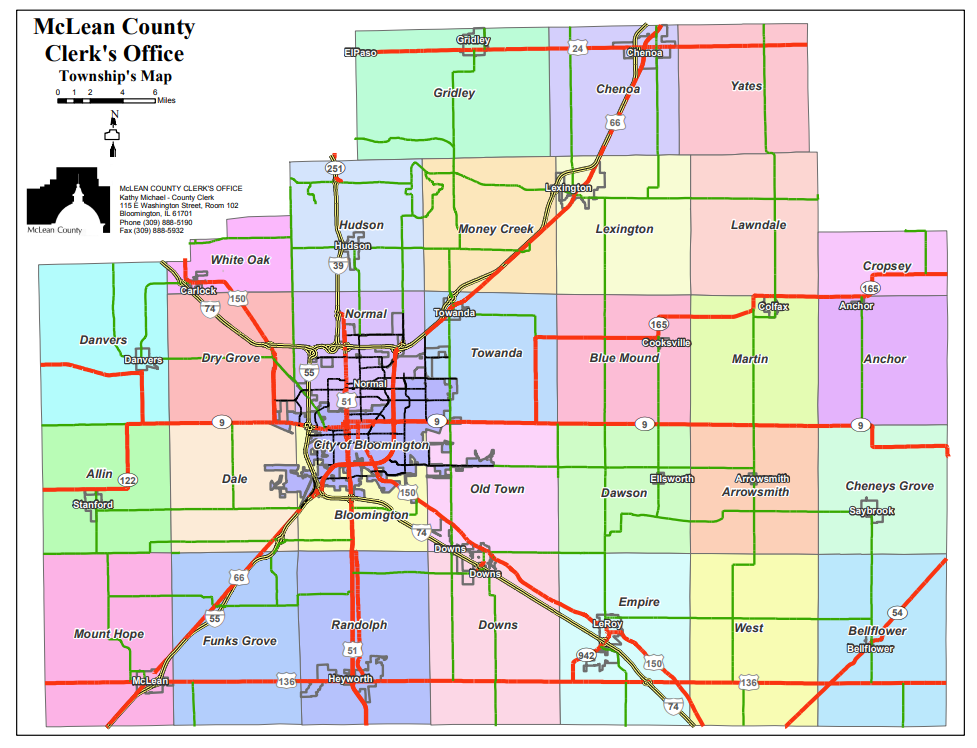
Danvers is a tiny village in central Illinois, twenty miles from where I live. Its current population hovers around 1,100. Until recently, I wasn’t even sure I had ever driven through it.
Yet in the spring of 1857, three branches of my wife Jane’s German immigrant family all moved there from Ohio.
And then, almost as quickly, they left.
Why?
That question sent me down a trail through German church records, prairie history, immigrant farming patterns, and a small Illinois town that briefly became a launching point for one family’s future.
One Family’s Journey
Three years ago, I became serious about tracing Jane’s family back to Germany. With help from an Ohio librarian and several remarkably efficient genealogists in Germany, I eventually assembled a substantial history of the Bittner family.
The story led to the village of Puschendorf in Bavaria, northwest of Nuremberg.
German Lutheran church records there reveal several generations of the Büttner family, including Johann Peter Büttner, born in 1794, his wife Margaretha Dietz, and their six children.
In 1842 the family departed Bremen aboard the Barque Louise and arrived in Philadelphia on Christmas Eve.
From there they traveled to southwestern Ohio, settling among other German immigrants in Butler County.
Over time the children married, established farms, and built lives in Ohio. Conrad Büttner married Katharina Lanz in 1855. Conrad’s brother Peter married Katharina’s sister Elisabeth a year later.
Then came Illinois.
In the spring of 1857, Conrad and Katharina moved to Danvers in McLean County with their infant daughter Elizabeth. Peter and Elisabeth made the same journey. Conrad and Peter’s sister Barbara and her husband George Herman were there as well.
Suddenly, this obscure little prairie village had become a waypoint for multiple branches of the family.
And then came the puzzle.
By 1860, none of them still lived in Danvers.
Conrad had moved to a farm near Hudson. Barbara and George Herman settled south of Danvers near Mosquito Grove. Peter and Elisabeth returned to Ohio after Peter’s father died.
Yet one important event had occurred during the family’s brief stay in Danvers.
On January 11, 1859, Conrad and Katharina’s son John Bittner was born there.
John would become Jane’s great-great grandfather.
For six generations afterward, the Bittners continued farming in McLean County.
So again:
Why Danvers?
Looking for Answers
To answer that question, I drove to Danvers myself.
I walked its quiet streets, took photographs, and spent time researching at the library of the McLean County Museum of History.
The answer begins with geography.
Central Illinois was part of the vast Grand Prairie, a landscape that early settlers from the British Isles often found unsettling. They preferred timber, streams, and familiar terrain. Trees provided building materials and fuel. Water meant survival.
As a result, settlers clustered around groves.
The future Danvers area sat among several of them: Mosquito Grove, Dry Grove, Twin Grove, and Stout’s Grove.
The village itself was originally called Concord. It was surveyed in 1836 and later renamed Danvers in 1861 after founder Israel Hall’s hometown in Massachusetts.
The earliest settlers were mostly English and Scots-Irish Protestants. Methodists, Presbyterians, Baptists, and Christians established congregations long before the Civil War.
But in the 1850s another group arrived in growing numbers:
German immigrants.
The German Connection
In 1851, Rev. Jonathan Yoder organized German-speaking Amish settlers in the area east of Danvers. Their Rock Creek church became the first Amish church house in Illinois. They later identified with the Mennonites.
German Mennonite communities soon spread through nearby settlements including Congerville, Carlock, East White Oaks, and Normal.
This mattered enormously.
Immigrants rarely moved into isolation. Germans followed other Germans. Shared language, farming knowledge, and social connections reduced the enormous risks of frontier life.
Historian Greg Koos of McLean County explained to me that immigrant farmers often advanced through recognizable stages. A newcomer might begin as a laborer, become a hired hand, then a tenant farmer, and eventually — if successful — purchase land of his own.
That pattern perfectly fits the Bittners.
When Conrad and Katharina arrived in McLean County, Conrad was still classified in the census as a farm laborer. Within a few years, however, the family owned land.
Danvers, it turns out, was probably never intended to be the final destination.
It was an entry point.
A place where German-speaking immigrants could find work, learn local farming methods, establish connections, and begin climbing toward land ownership.
The mystery was becoming clearer.
But Why Go Where There Is No Lutheran Church?
One detail still puzzled me.
The Bittners were lifelong Lutherans. Their family had worshiped in Lutheran churches in Germany and Ohio for generations.
Yet there was no Lutheran church in Danvers in 1857.
According to the Danvers Community History, scattered Lutheran families were served only occasionally by traveling pastors, with services held in homes. Zion Lutheran Church in Danvers would not formally organize until 1873.
So why would committed Lutheran immigrants settle there?
Again, the answer appears to be practical rather than theological.
For immigrant families, survival came first.
The Bittners may not have found a Lutheran congregation, but they found German-speaking farmers who understood the challenges they faced. In the dangerous economics of frontier farming, that mattered more than denominational alignment.
Tragedy and Persistence
The story did not unfold gently.
In 1866, Conrad and Katharina’s infant son Andrew died at only four months old.
One month later, Conrad himself died at age forty-two.
Katharina was left widowed with two surviving children: Elizabeth, age ten, and John, age seven.
Many family stories might have ended there.
This one did not.
Katharina managed the farm, raised her children, and expanded the family’s holdings. Her son John spent his entire life farming in McLean County, living on the home place, while acquiring additional farmland elsewhere.
Generation after generation followed.
Today, six generations later, the Bittner family still tills McLean County soil.
The Answer
So why Danvers?
Not for its beauty, set in gentle green undulations of the Bloomington moraine.
Not because it was yet prosperous.
Not because the family intended to stay forever.
They came because other Germans were already there.
Danvers offered language, opportunity, guidance, and a foothold on the prairie. For immigrant families arriving from another continent, that was enough.
The village served as a bridge between old worlds and new ones.
For the Bittners, Danvers was temporary.
But it changed everything.
Threads to Follow
1. How much of immigration history is really the history of networks?
The Bittners did not move randomly. They followed language, familiarity, and opportunity. How often do immigrant communities grow because people follow people they trust?
2. What makes a place “important” in family history?
Danvers was only a temporary stop for the family, yet it became the birthplace of future generations. How do brief moments or small places shape entire family stories?
3. What sacrifices did immigrant families make in exchange for opportunity?
The Bittners left established church communities and familiar surroundings to take risks on the prairie. What comforts or traditions are people willing to give up when survival and advancement are at stake?
4. How does local history become personal history?
This story blends census records, church documents, prairie settlement patterns, and a visit to a small-town library. What hidden stories might exist in the communities where we live right now?
5. What explains persistence across generations?
Conrad died young, yet Katharina held the family together and later generations remained on the land for more than 150 years. What qualities allow some families to endure hardship and maintain continuity over time?
An Invitation
We invite you to share your stories about people and places that matter to you. Stories submitted to StarHitchers.com are published on both the website and Substack.
StarHitchers.com provides guidance, resources, and instructions to help you create and submit your work. If you have questions, please contact us at info@starhitchers.com. We are always happy to discuss story ideas and help contributors shape their projects.
We look forward to reading the stories that only you can tell.
Subscribe to the FREE Substack blog at: https://starhitchers.substack.com/subscribe
Author
Name: Sam Redding
Place of Residence: Towanda, McLean, Illinois
Primary Sources: McLean County History Museum library; Danvers Community History by Danvers Historical Society, 1987; librarian in Ohio; genealogist in Germany; Ancestry.com
Subject
Place reported: Danvers, McLean County, Illinois
Timespan: 1800-1860
Most descriptive characteristics: Historical, Agricultural