
Story 11: A Day for Counting and Catching Up
The Fourth in My Hometown
By Sam Redding
This is the story of the Fourth of July in Towanda, Illinois, my hometown. I hope these memories resonate with anyone who treasures the heritage of both family and country. Let’s hear your story. See StarHitchers.com
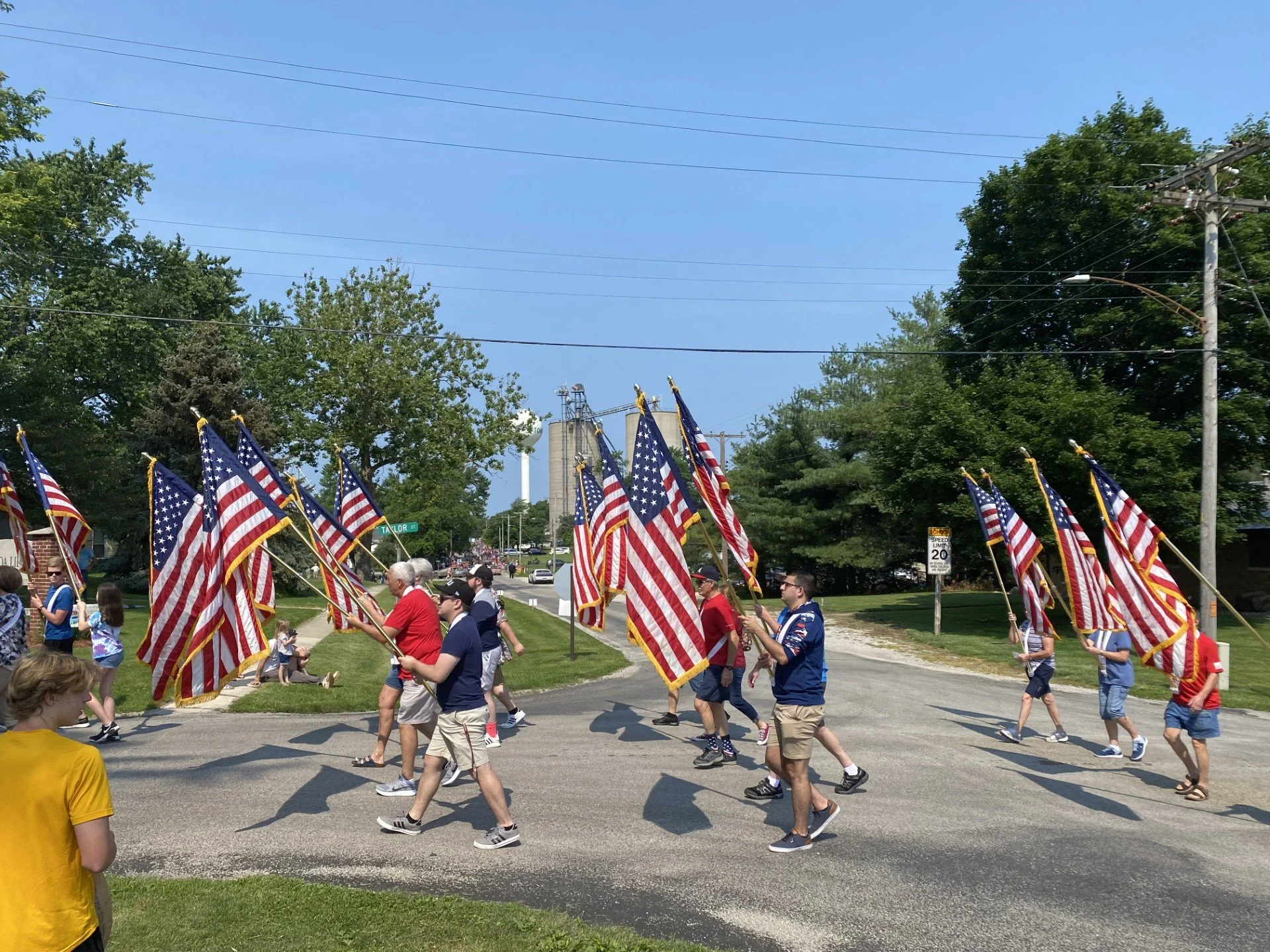
Fourth of July parade in Towanda, Illinois
The Story
Independence Day is something special for my family. We commonly refer to it as “The Fourth.” Our flags fly high on The Fourth, regardless of political differences or who occupies the White House. Our flags fly for a country we love, sweet land of liberty.
My youngest brother, Gary Mel, was born on The Fourth, back in 1955, a month after my mother arrived in Illinois on the train from Kansas with my two brothers in tow.
My dad, our dog Ginger, and I had made our move to Illinois in May, the last day of my third-grade year. We lumbered across Missouri in our ’37 Chevy.
My folks called the old Chevy their “honeymoon car.” They had married in 1943, the day Dad graduated from officer’s training at Great Lakes Naval Base.
Uncle Babe, then 16 years old and the wedding’s only attendee other than the minister, witnessed the marriage at the big Methodist Church in Evanston. Mom and Dad years later joked that because Babe was not 21, their marriage may not have been legal.
The day after their wedding, Mom and Uncle Babe traveled by train back to Kansas, and Dad went to war. I’m not sure my folks ever took a honeymoon.
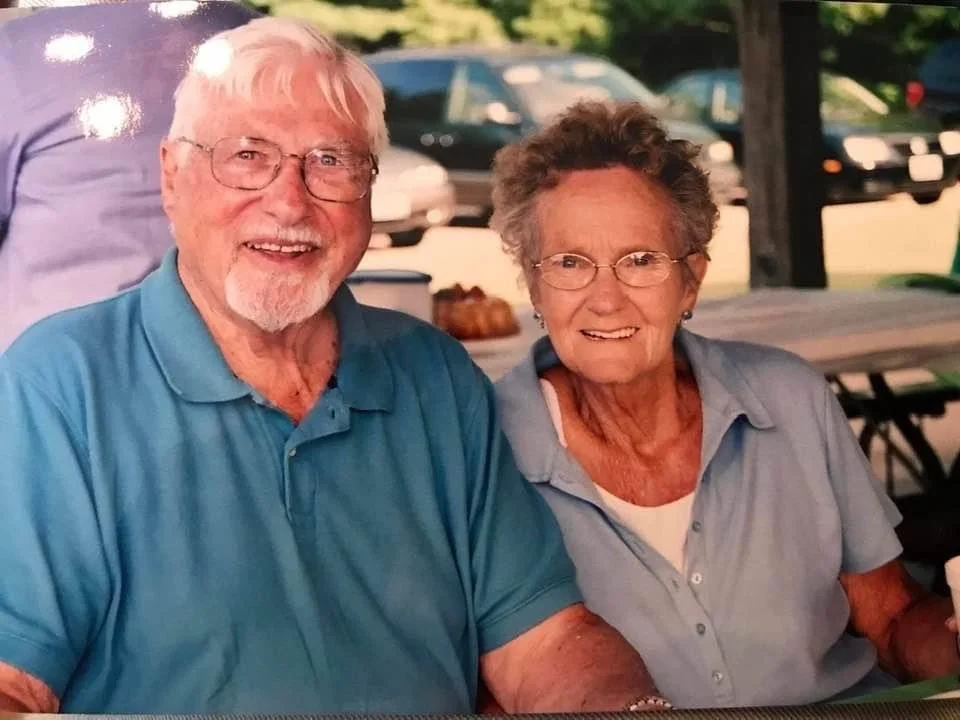
Roy Lee and Margie Jean Redding, my dad and mom, honeymooners forever.
When Gary Mel was born, only ten years had passed since Dad came home from war. He and Mom were now parents of four boys, living in a small town in a state removed from the small town and state where their story began.
We called our newborn brother Baby Mel. By the time he could waddle, we had dubbed him Melsie, a name that stuck for a decade.
Melsie’s birthday gave The Fourth a significance for our family, layered onto the day’s importance for our nation. Today Melsie is the Rev. Dr. Gary Mel, a Baptist minister in Tennessee, with his wife Tonda.
Such is our family’s story; rarely are two generations born in the same state. We tend to move away, but many of us return for The Fourth.
A Day for Catching Up
In our early years in Illinois, The Fourth was mostly a family affair. Our cousins came from Wisconsin, and a few neighbors dropped by. We lit fire to black snakes on the sidewalk and set off the low-capacity firecrackers that were legal in the state. Birthday cake for Melsie.
On the morning of The Fourth, Dad loaded a couple boys into the station wagon for a short trip to the Lee Street icehouse in Bloomington. We plunked quarters into an ice machine and came home with ice and salt to make homemade ice cream.
We took turns cranking the ice maker until our little-boy arms ached. We lunched on picnic tables under a walnut tree. We lit sparklers and chased around the yard when the sun went down.
During those first years, our Fourth belonged mostly to our family. Then Towanda decided to go big with the holiday, making it a grand community event. A huge parade, flea market, watermelon-eating contest, softball and egg toss at the schoolground, spaghetti at the community building, dance in the park, fireworks. Service organizations and youth groups all pitched in.
Towanda swelled from a population of 450 to a crowd of 15,000 each year on The Fourth.
Our family gathering grew too, year by year. Aunts, uncles, cousins, and friends came from Canada (of all places), Florida, Kansas, Texas, Wisconsin, California, Colorado, Arizona, and Tennessee. Even from Germany, cousins returned home for The Fourth.
We gathered at the house where I grew up, at the edge of the village. For more than half-a-century, the pattern has remained the same.
The morning parade strings out for a mile, winding through the village streets that are lined with enthusiastic spectators. Interspersed with the floats and tractors and bikes, fair queens and politicians wave from convertibles. Paradians throw candy to kids who line the streets. The Shriners’ little cars putt along in formation.
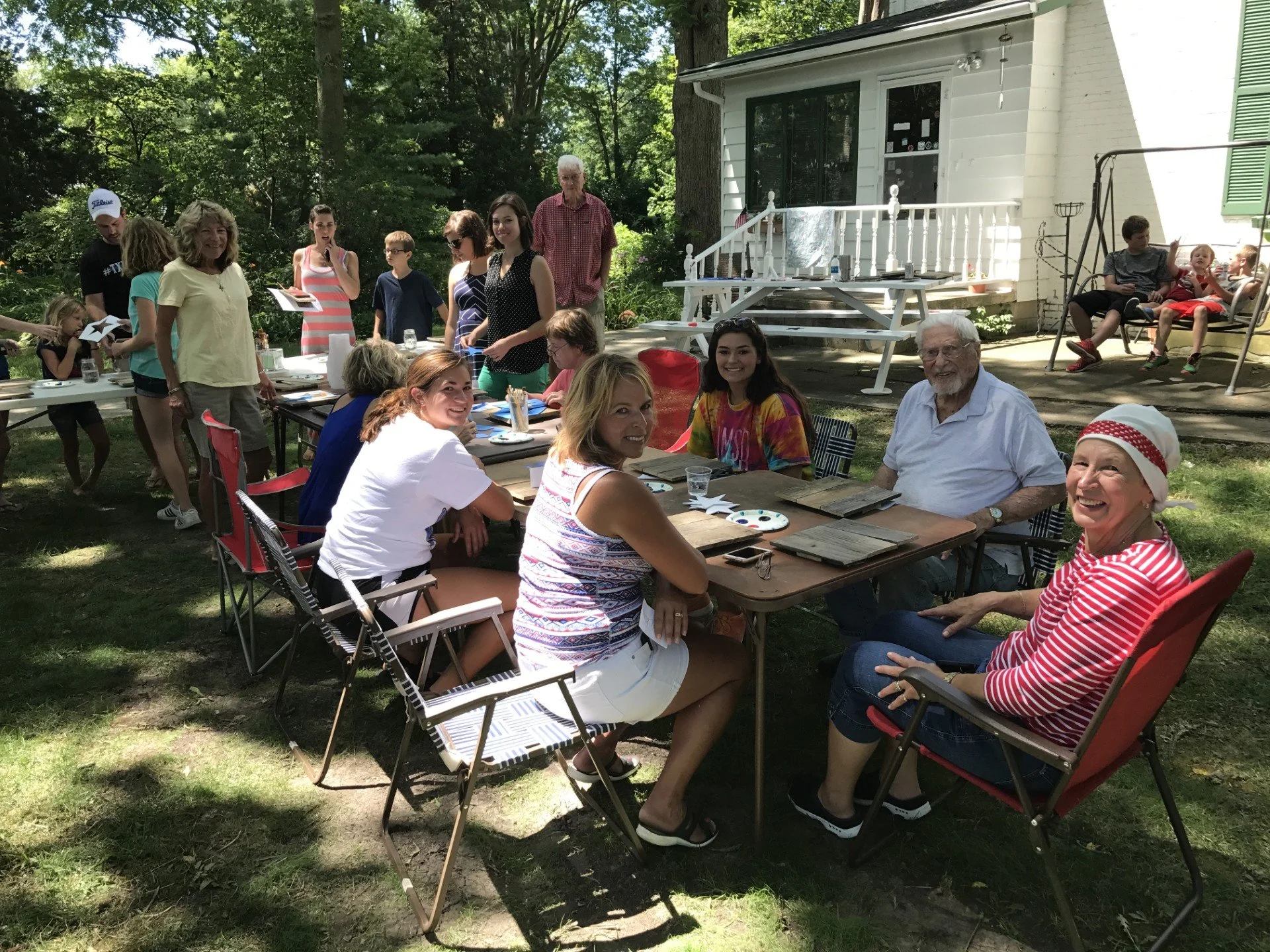
After the parade, our family and friends come back to the house to sit in lawn chairs under catalpa trees and catch up.
Catching up is the essence of The Fourth.
We line up and walk through the house to fill our plates with fried chicken and baked beans, potato chips and gooseberry pie. We return to our lawn chairs, plates in hand, and continue catching up.
In the evening, out-of-state cousins, oblivious to local law, shoot off fireworks in our pasture. Later the Village puts on a grand display, filling the night sky with color and light. We ooh and aah. We shriek with each cannon boom.
A Day for Counting
For us, The Fourth is a day for counting—the ones who have died, and the ones who have been born.
Every year we do the math. Adding and subtracting, losing older generations, gaining new ones.
Our children marry, and we gain their spouses and in-laws. New friends join us.
Moms arrive with their newborns fitted in red, white, and blue onesies. Still the losses mount, but never enough to offset the gains.
First, we lost our grandparents, all of us, including spouses and cousins with their own grandparents. Then we lost regular attendees at the Fourth, aunts and uncles who advanced in age almost without notice to us. Then one year they didn’t return.
Cousins Kenny and Doug died, too young, a shock. Cousins who had been with us every year since the days we lit fire to black snakes on the sidewalk.
My immediate family also lost members, year by year. My brother Kent lost his battle with multiple sclerosis. Aunt Beth, more a grandmother than an aunt, left us.
One year life stopped for the heart and soul of The Fourth, our mother, always up before dawn baking pies and tidying the kitchen, ready to greet each guest with a hug. She fell to final rest in our dad’s arms in the house where we gather for The Fourth.
My wife Jane’s parents died, six months apart, one leaving this world to reunite with the other.
Would We Gather?
My brother Rod’s son Aaron was his firstborn, and my first nephew. Aaron was thriving in Texas, a graduate of Texas A&M, first a teacher and then a financial advisor, married to Kristin, a teacher, with three beautiful children.
Aaron was one of the first to arrive on The Fourth, driving his family from Texas. His million-dollar smile embodied the spirit of the day.
In the summer of 2022, I got a call in the night from my brother. Aaron had passed away. Suddenly and unexpectedly, his heart stopped.
On June 3, friends and family filled the room and lined the walls at the Texas funeral, a testament to Aaron’s impact on many lives. His dad (my brother) mourned at home that day, quarantined with COVID.
When we got back home in Illinois, some of us fell sick with the virus, including Dad, now 101 years old. We worried, but he recovered smartly.
The Fourth came one month after the funeral. In between was the COVID outbreak. Would the family gather?
In fact, we did. Including Aaron’s young widow and three children. Everyone was back. We churched with the Morningstar Methodists outdoors at East Bay camp on Lake Bloomington on Sunday that year, just the right balm for the moment.
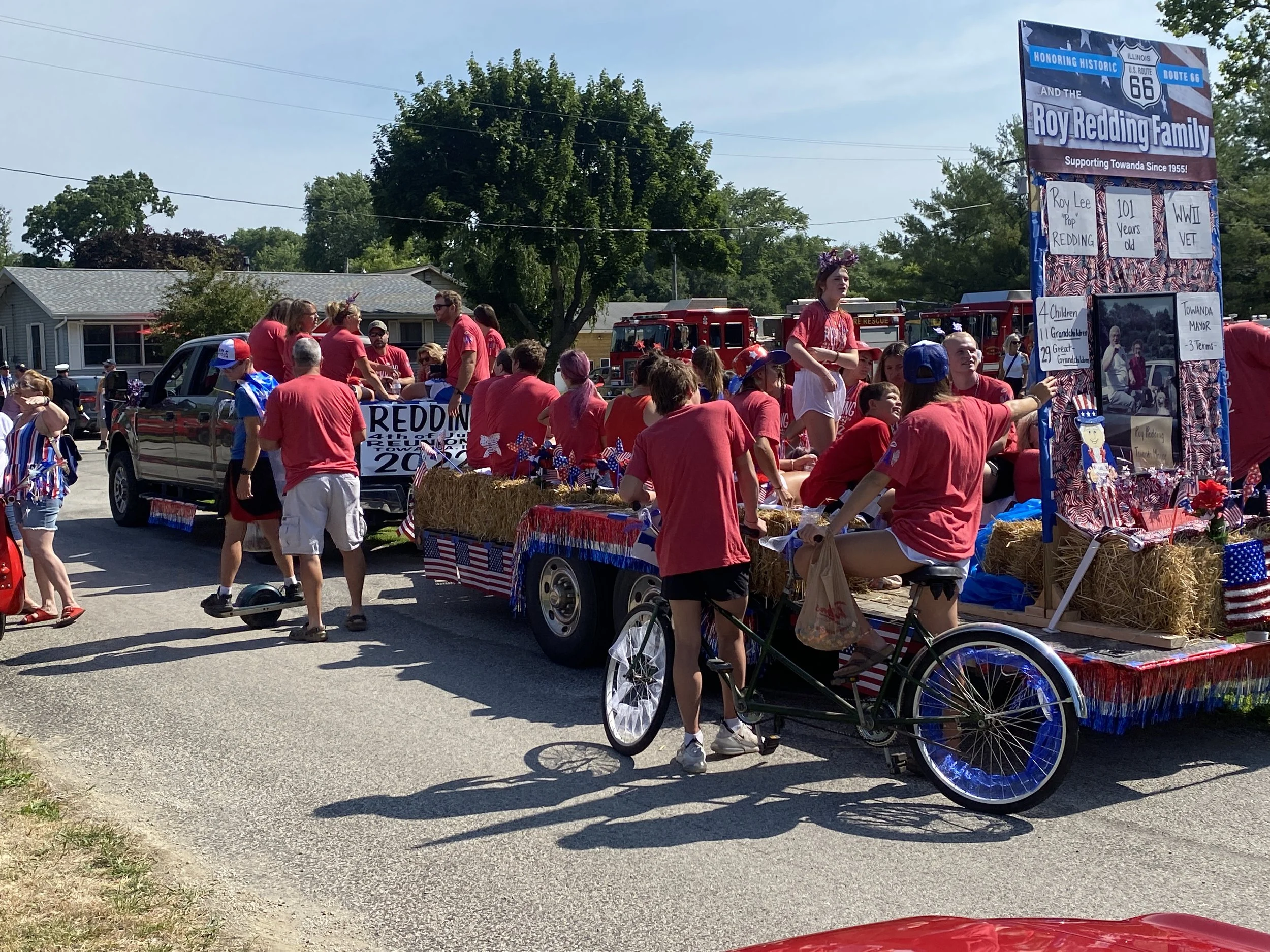
In recognition of my parents’ decades of service to Towanda, our family was honored that year in the parade. The kids decorated our float—red, white, and blue. Our red T-shirts carried a decal remembrance of Aaron, ever on our minds.
In the 2024 parade, Rod, a retired Air Force fighter pilot, drove my red truck. Dad, 101 and a Navy veteran of World War II, threw candy from the window. My Uncle Alfred, Army veteran of Viet Nam sat behind them, next to my cousin Nick, recently commissioned an officer in the Marines.
Military service has been woven through our family for three generations.
I would never compare my own work with their sacrifices, but my decision to become an educator was partly inspired by a desire to serve this country in my own way. I suspect Gary entered the ministry for much the same reason.
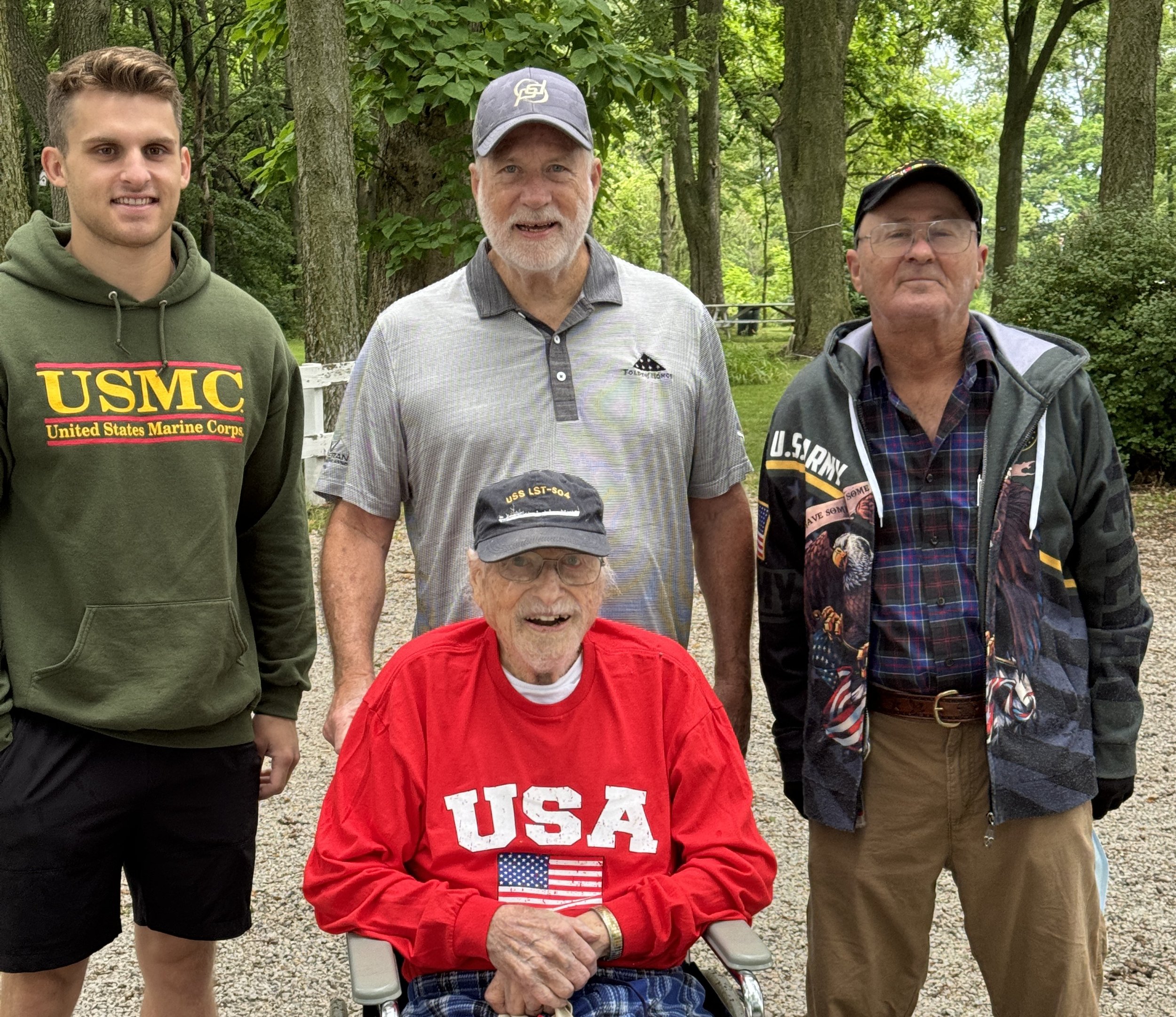
Nick Redding, Rodney Redding, Alfred Redding, and in front Roy Lee Redding, 2024.
On August 6, 2024, Dad left us, a month after celebrating The Fourth, just shy of his 104th birthday. The little Baptist Church in Towanda filled to the gills, with full military rites at the cemetery, flags everywhere.
On The Fourth in 2025, my granddaughter Ali and her husband, John, arrived from their seasonal home in New Orleans. With them, baby Johnny proved what my Dad always remined us: Life goes on.
In October that year, Dad’s brother Alfred, the last of my uncles and aunts, was buried in Kansas, high on Hubble Hill near Tonganoxie. His Christian motorcycle club put him to rest after their moving tribute to his friendship and generosity of spirit.
We added and we subtracted.
The Fourth is my brother’s birthday and the day we celebrate our good fortune for living free in America, this sweet land of liberty.
Every Fourth we catch up with one another.
We count those who have gone before us.
We count those who have just arrived.
Happy birthday, Melsie.
Happy birthday, America.
Welcome, Johnny.
Threads to Follow
1. What traditions or annual gatherings hold your family together? How have those traditions changed over time, and what keeps them alive?
2. The author describes The Fourth as “a day for counting and catching up.” What holidays or occasions cause your family to look backward as well as forward? Why do those moments matter?
3. How does a community celebration strengthen a town? What roles do parades, picnics, churches, veterans’ organizations, and volunteer groups play in creating a shared identity?
4. Military service appears in several generations of the author’s family, while other family members served through education and ministry. In what different ways can people serve their country and their communities?
5. The story reminds us that every family gathering includes both absence and arrival. How do births, deaths, marriages, and new generations shape your family’s story? Who will remember and tell those stories fifty years from now?
Author
Name: Sam Redding
Place of Residence: Towanda, McLean, Illinois
Primary Sources: Memories
Subject
Place reported: Towanda, McLean County, Illinois on the Fourth of July
Timespan: 1955-2026
Most descriptive characteristics: Historical, Agricultural, Nurturing