
Story 08: Why Was He Lonesome?
Not the Question I Expected
By Sam Redding
The author is surprised by the question he is asked when telling about his unfortunate ancestor. Tell your story at Star Hitchers.com.
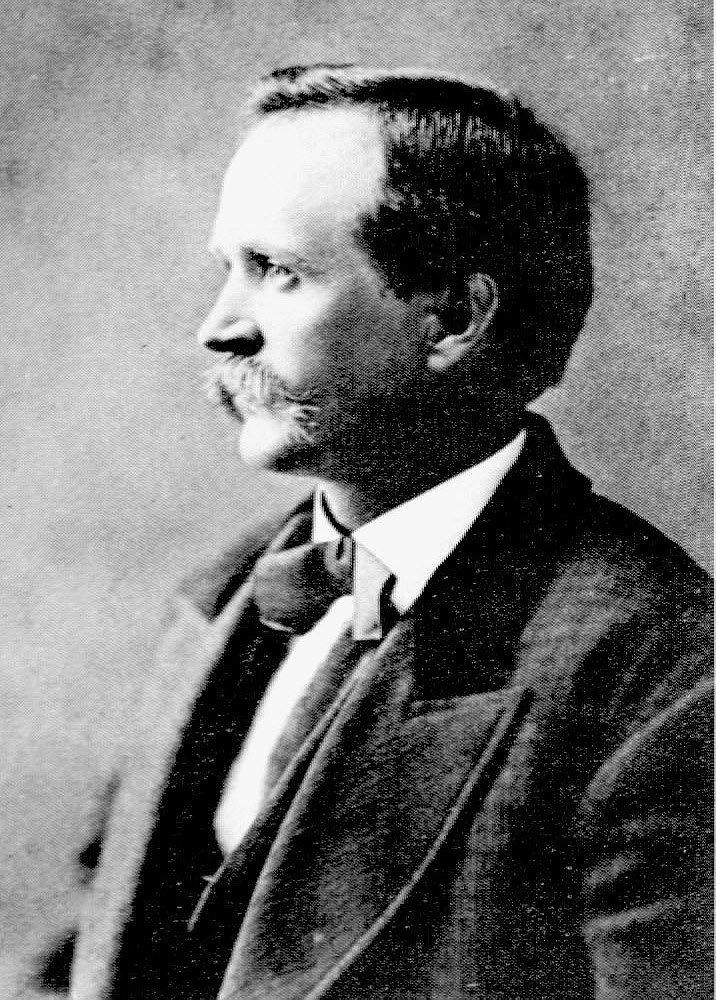
Charles Alexander Reynolds, 1842-1876
The Story
I was given the first name of my maternal grandfather—Sam Allen.
Sam was six years old in the summer of 1876 when his father, Richard Allen, unfolded a rumpled newspaper and called his wife Melinda and the children to the kitchen table. The news had finally reached eastern Kansas.
Melinda’s brother, Charley Reynolds, was dead.
More than a week earlier, an Indian bullet had struck him near the Little Bighorn River in Montana Territory. News traveled slowly on the frontier. By the time it reached his family, Charley was already becoming a legend.
Known throughout the West as “Lonesome Charley,” Reynolds had served in the Union Army, hunted buffalo, carried mail for the Pony Express, scouted for Buffalo Bill Cody, and scouted for George Armstrong Custer. Native Americans respected his skill as a hunter and tracker. Fellow frontiersmen considered him one of the finest scouts on the northern plains.
His family had lost a brother and uncle. History had gained a legend.
More than a century later, I found myself thinking about Charley while sitting before an audience in Billings, Montana.
The Little Bighorn battlefield was only a short distance away. I had visited it the previous day and was still caught up in its history.
I was there to explain educational services available to reservation schools. Seated before me were representatives of Crow, Northern Cheyenne, and Assiniboine communities. About a hundred people filled the room.
The atmosphere was not what I expected.
The first speaker finished and handed me the microphone. I looked out over a sea of unsmiling faces. My enthusiasm for the history of the place was not being shared.
I shifted uneasily in my chair.
Thinking I might establish some rapport, I told them about my famous relative, Lonesome Charley Reynolds.
As I spoke, I became increasingly uncertain. The room remained silent.
When I finished, nobody reacted.
Then a young Native woman seated near the back raised her hand.
I called on her.
She asked a question in four words.
“Why was he lonesome?”
Not who was he.
Not how did he die.
Not whether he fought with Custer.
Why was he lonesome?
The question caught me completely off guard.
I had been thinking about Charley as a scout, hunter, soldier, and frontiersman. She was wondering about the man.
I relaxed immediately.
“One story says he earned the nickname because he hunted and traveled alone and was naturally quiet,” I replied. “Another story claims he left a love behind in Mexico—and may have cut off the arm of a rival suitor.”
A ripple of laughter moved across the room.
The ice was broken.
Soon another audience member invited me to visit her ranch, where Sitting Bull’s pictographs could still be seen on nearby boulders. The conversation flowed easily after that. Except on the topic of school improvement.
In later years I came to know the young woman who asked the question. Her name was Mandy Smoker Broaddus, a member of the Sioux and Assiniboine tribes. We occasionally worked together, and I learned that the compassion reflected in her question was characteristic of her. She later became Montana’s Poet Laureate.
Looking back, I realize that Mandy understood something I had overlooked.
History often turns people into symbols. Charley Reynolds became a scout, a hero, a frontier legend. Yet Mandy’s question cut through all of that.
Why was he lonesome?
It was a question about loneliness, relationships, and the inner life of a man who spent much of his adult life on the frontier. It was a question about humanity.
The truth is that we know only fragments of Charley’s life.
Charles Alexander Reynolds was born in Illinois in 1842 to a family of Kentuckians. The family returned to Kentucky when Charley was two years old. His mother died there a year later. Charley’s father remarried in 1850 and took the family back to Illinois in 1854, with Charley driving a team of oxen.
In 1859, Charley’s father, Joseph, a physician and farmer, moved the family to Kansas as part of the migration of anti-slavery Christians recruited by Pastor Pardee Butler.
In 1861, Charley enlisted in the Tenth Kansas Volunteer Infantry and served during the Civil War. Afterward he hunted buffalo, guided expeditions, and became one of the best-known scouts in the West.
Buffalo Bill Cody wrote that Reynolds “ranked with the best” as a hunter and scout. Colonel Philetus Norris described him as “moral, temperate, mild and quiet.” Elizabeth Custer later called him a gentleman and a hero.
Yet despite his reputation, much of Charley’s personal life disappeared into the silence of history. He never married. He spent long periods alone. The stories that survive focus on his exploits rather than his thoughts.
Perhaps that is why Mandy’s question still lingers with me.
Of all the questions someone could ask about Lonesome Charley Reynolds, she chose the one that history cannot fully answer.
Why was he lonesome?
I suspect Charley himself would have appreciated the question.
Threads to Follow
1. History remembers Charley Reynolds as a scout, hunter, and frontier hero. What question would you most like to ask him about his personal life?
2. Have you ever discovered that the most important question about a person was not what they accomplished, but who they were?
3. Why do you think some people choose a solitary life? Is loneliness always a burden, or can it sometimes be a calling?
4. Family stories often elevate ancestors into larger-than-life figures. How do we honor those stories while still remembering that our ancestors were ordinary human beings?
5. Mandy Smoker Broaddus asked, “Why was he lonesome?” What question about a historical figure has helped you see that person in a new and more human way?
An Invitation
Every family has stories worth preserving. Every community has places worth remembering. Together, these stories help us understand who we are and how we came to be here.
The Star Hitchers project collects and shares original stories about people and places across America. Our goal for 2026, the 250th anniversary of the United States, is to build a growing library of stories that capture the lives, experiences, and communities that make up our nation.
We invite you to contribute your own story—whether about a family member, a local landmark, a hometown tradition, or a place that has special meaning to you. Visit StarHitchers.com for guidelines, resources, and submission information.
We would be honored to help tell your story.
My sources of information about Charley Reynolds
Our family had in its possession a letter from Charley to my great-grandmother Melinda Reynolds Allen. My grandfather passed on to his children remembrances of learning of Charley’s death. Tom Best, a historian and teacher in Monmouth, Illinois, near the childhood home of Charley Reynolds, corresponded with me. In February of 1998, Mr. Best published the first of three articles on Reynolds in the Little Big Horn Associates Newsletter, summarizing much of his research at that time. Mr. Best‘s work rests on a collection of articles written by John E. Remsburg and his son George in the Potter Kansan in 1914-15 and assembled into a book edited by John M. Carroll, first published in 1931 but revised in 1978. The slim volume, Charley Reynolds: Soldier, Hunter, Scout and Guide, includes an introduction by E. W. Howe and a piece by Dr. John S. Gray. Tom Best spent several years traveling, researching, and attempting to verify the Remsburg and related writings and to add new insights into the life of Lonesome Charley. My sketch of the life of Charley Reynolds draws heavily from the work of Tom Best.
Author
Name: Sam Redding
Place of Residence: Towanda, McLean, Illinois
Primary Sources: Family correspondence and oral history; Research and publications of Tom Best (see end of article)
Subject
Name of Subject at Birth: Charles Alexander Reynolds
Birth Date: March 20, 1842
Birthplace: Illinois
Name of Subject at Death: Charles Alexander Reynolds
Death Date: June 25, 1876
Place of Death: Montana Territory
Spouse(s): None
Other Key Locations: Kentucky, Illinois, Kansas
Most admirable qualities: Service, Resilience, Occupational/Professional Accomplishment